
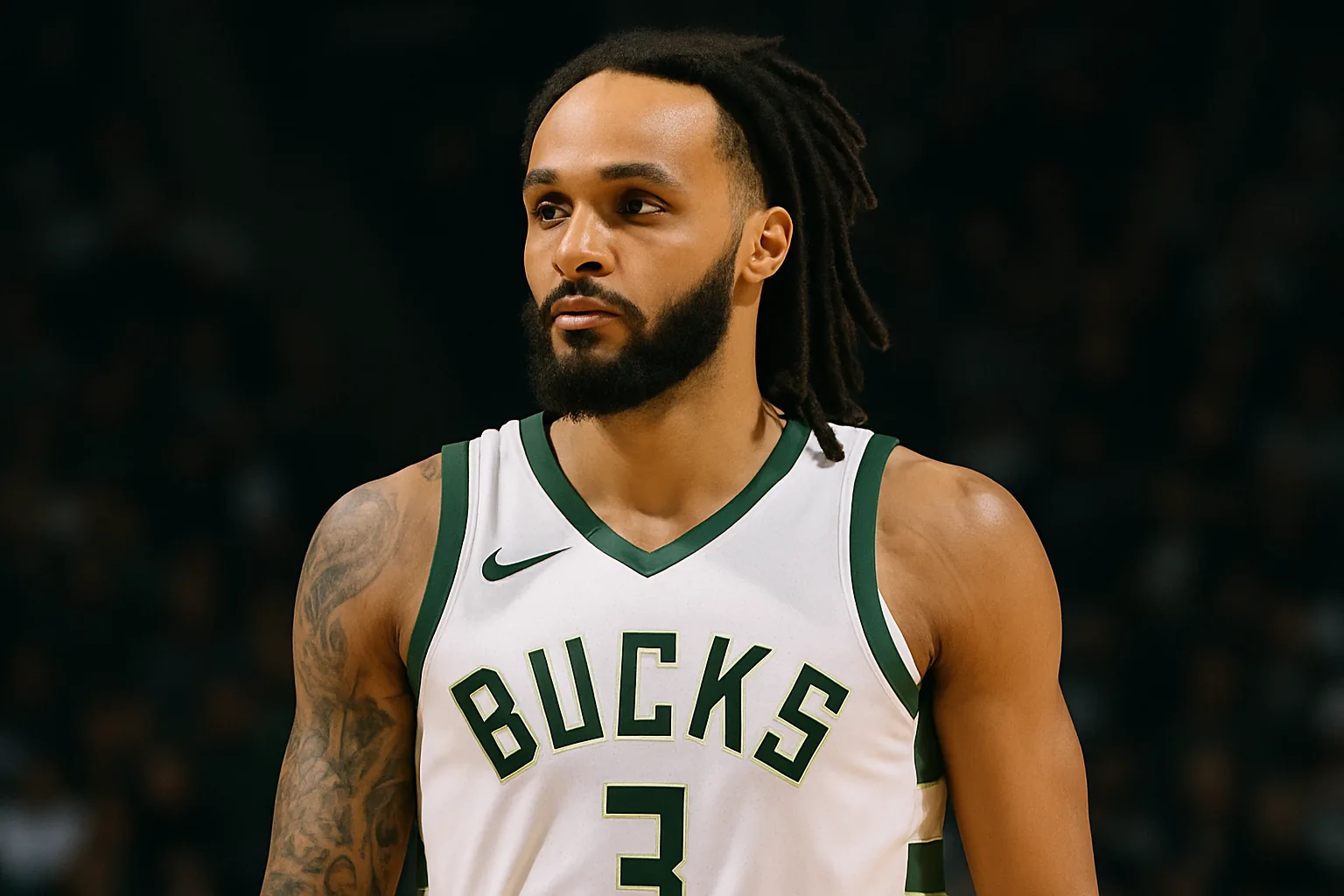
The NBA is reviewing Gary Trent Jr.’s new four-year, $64 million contract with the Milwaukee Bucks for possible salary-cap circumvention. The review was confirmed after the deal’s unusual financial arc became a major topic around the Las Vegas Summer League.
No violation has been established, and neither the Bucks nor Trent has been disciplined. The issue is not simply whether Milwaukee paid too much. The league must determine whether the contract was negotiated on its present merits or connected to an unauthorized agreement made when Trent first accepted substantially less money.
Why the contract attracted attention
Trent entered the summer of 2024 after completing a three-year, $52 million contract. Instead of finding another substantial multiyear deal, he joined Milwaukee on a minimum salary and remained on low-cost terms for two seasons.
His latest season did not offer an obvious statistical explanation for a dramatic raise. The 27-year-old averaged 8.1 points and shot 38.7% from the field, a decline that made his subsequent four-year guarantee especially conspicuous. The new contract reportedly begins at approximately $15 million and uses the spending range associated with the full mid-level exception.
That sequence prompted the suspicion described by NBC Sports: Trent may have accepted below-market salaries while Milwaukee waited to acquire the contractual rights needed to pay him substantially more later.
Suspicion, however strong, is not proof. ESPN’s Shams Charania reported that another team had explored a sign-and-trade involving roughly comparable money. If Milwaukee can document genuine outside interest at that price, the contract becomes easier to explain as a market decision rather than a delayed payment. No public details about that team or its proposed terms have emerged.
The cap mechanism at the center of the review
The NBA operates with a soft salary cap. Teams can exceed it in specific circumstances, including when re-signing players who have remained with them long enough to establish certain rights.
After two seasons in Milwaukee, Trent had Early Bird rights. Those rights gave the Bucks greater flexibility to retain him without first creating the same amount of conventional cap room. Used normally, the provision rewards roster continuity and allows teams to keep their own free agents.
The problem would arise if that future flexibility had been part of an earlier bargain. A team cannot ask a player to accept a small contract today in exchange for a promise of a richer deal once the necessary rights have been established.
Article XIII of the current NBA collective bargaining agreement prohibits express or implied understandings about a future player contract. It also permits such a violation to be established through circumstantial evidence, including evidence that a contract cannot be rationally explained without prohibited conduct.
That last provision explains why the economics matter. An unexpected contract is not automatically illegal, but the league does not necessarily need to find a document labeled “future payment agreement” before asking whether the sequence had another credible explanation.
A simple example
Imagine a veteran wing independently accepts the minimum for two years because his market has weakened. After the second season, his team gains Early Bird rights, another club offers him a major contract and his original team pays $64 million to retain him. That can be a lawful progression, even if the final deal looks generous.
Now change one fact: before the first minimum contract, the team privately promises to compensate the player after his Early Bird rights mature. The visible transactions are nearly identical, but the private promise turns a roster-building strategy into cap circumvention.
The NBA’s task is to establish which version, if either, the available evidence supports in Trent’s case.
Why the outcome matters beyond Milwaukee
Salary-cap exceptions divide present spending power from future spending power. If teams could routinely bridge that gap with undisclosed promises, the practical value of the cap would weaken.
A capped-out contender, for example, could recruit a player at the minimum by offering compensation in a later season. The team would receive useful production before it had the legal mechanism to pay the market rate, while rivals following the written rules would have to use current cap space or an available exception.
That is why this case is more significant than a debate over Trent’s basketball value. The league has to preserve confidence that a minimum contract is actually a minimum contract—not the first installment of an arrangement kept outside the official paperwork.
The review also presents an enforcement difficulty. Competing front offices may be reluctant to complain aggressively about conduct they believe occurs elsewhere, particularly if they do not want their own negotiations examined. And if rivals consider Trent’s new contract unfavorable, leaving the full $64 million on Milwaukee’s books may look more useful to them than helping the league unwind it.
What the NBA will need to resolve
The contract’s size and timing give the league a reason to investigate, but a final finding will depend on evidence about how the two sides communicated and how Milwaukee reached its valuation. The reported sign-and-trade interest could become important if it was concrete, contemporaneous and financially comparable.
Under Article XIII, potential sanctions for an unauthorized prior agreement can include a team fine of up to $7.5 million, forfeited draft picks, voiding the contract, a player fine of up to $350,000 and a suspension of up to one year for team personnel found to have participated willfully. Those are available penalties, not predictions about this case, and they would require the applicable findings and review process.
For now, the relevant points to watch are straightforward:
- Whether the league finds evidence of discussions linking Trent’s earlier minimum deals to his 2026 contract.
- Whether Milwaukee can substantiate the reported outside market for a contract near $64 million.
- Whether the NBA clears the deal, imposes discipline or seeks to void any part of the transaction.
The sharp change in Trent’s compensation explains the scrutiny. It does not settle the case. The decisive question is whether Milwaukee made an aggressive free-agent valuation in 2026—or acted on a commitment that the CBA never allowed it to make.