
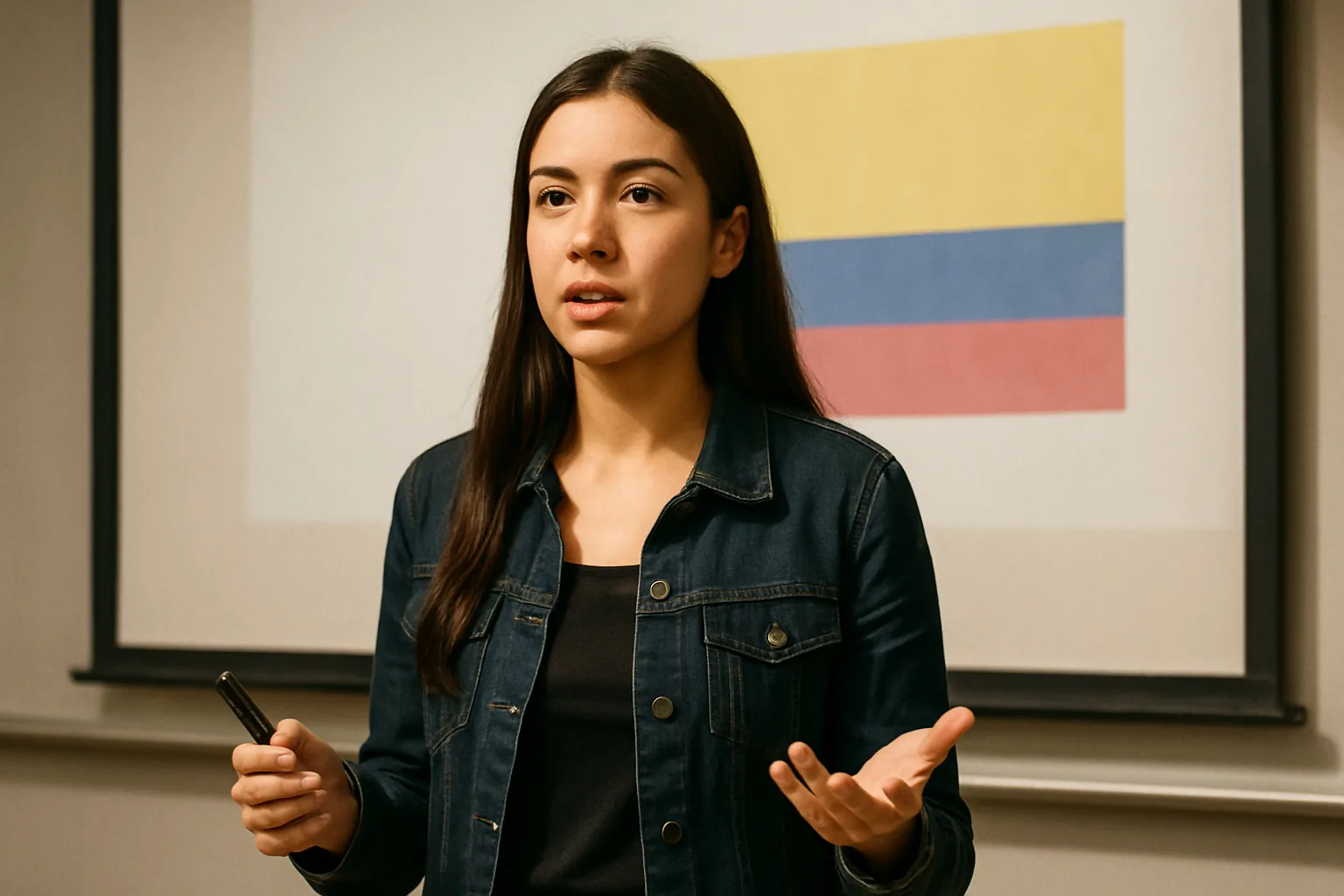
Gabriela Alonso Jaramillo's rise as a political explainer in Colombia stands out because she is addressing a problem many democratic systems struggle with: younger audiences often see politics as distant, jargon-heavy, and designed for insiders. Rather than accepting that disengagement, Alonso has used TikTok to explain how Colombian government actually works in language that feels direct and accessible to people her own age.
That makes her work significant beyond social-media novelty. It is an example of how creator-led journalism and civic education can overlap when traditional political communication fails to reach younger citizens.
Why her audience gap matters
Alonso, a political science and public affairs student in Bogota, has said she was struck by how many people around her wanted to be apolitical or felt disconnected from public life. That reaction reflected a wider problem in Colombia, where polarization is rising and youth voter engagement remains weaker than many civic advocates would like. When people do not understand institutions, it becomes easier for politics to feel irrelevant or manipulative.
Her account, Politica para apoliticos, is built around closing that gap. Instead of assuming prior knowledge, she breaks down current events, public bodies, and political incentives in a way that helps viewers understand who holds power and why decisions matter.
What makes the format effective
TikTok is central to the strategy because it reaches people in the environment where they already spend time, not in the places legacy political media expects them to visit. Short-form explainers also force clarity. A creator cannot rely on dense institutional language if the goal is to hold attention and still communicate something useful in a few minutes or less.
That matters because many young viewers are not rejecting public affairs altogether. They are rejecting communication that feels inaccessible, performative, or disconnected from how they actually consume information.
Why this reflects a broader media shift
Alonso's work fits a larger trend in which individual creators increasingly act as interpreters of news and public systems for audiences under 30. In that environment, trust is often earned less through institutional prestige than through clarity, consistency, and a sense that the speaker understands the audience's frustration. Her project shows how civic explanation can become a form of public service when conventional outreach fails.
It also raises a useful challenge for politicians and newsrooms. If a student on TikTok can make politics legible to disengaged viewers, established institutions have less excuse for continuing to communicate in ways that push the same people away.
What the story suggests
The significance of Alonso's project is not that one creator can fix political disengagement by herself. It is that she demonstrates a practical model for reducing the distance between citizens and institutions. When younger voters feel politics is understandable, they are more likely to treat it as something they can influence rather than something done to them.
That is why her work matters. It shows that civic literacy can be rebuilt through formats and voices that feel native to the audience, not imposed from above.