
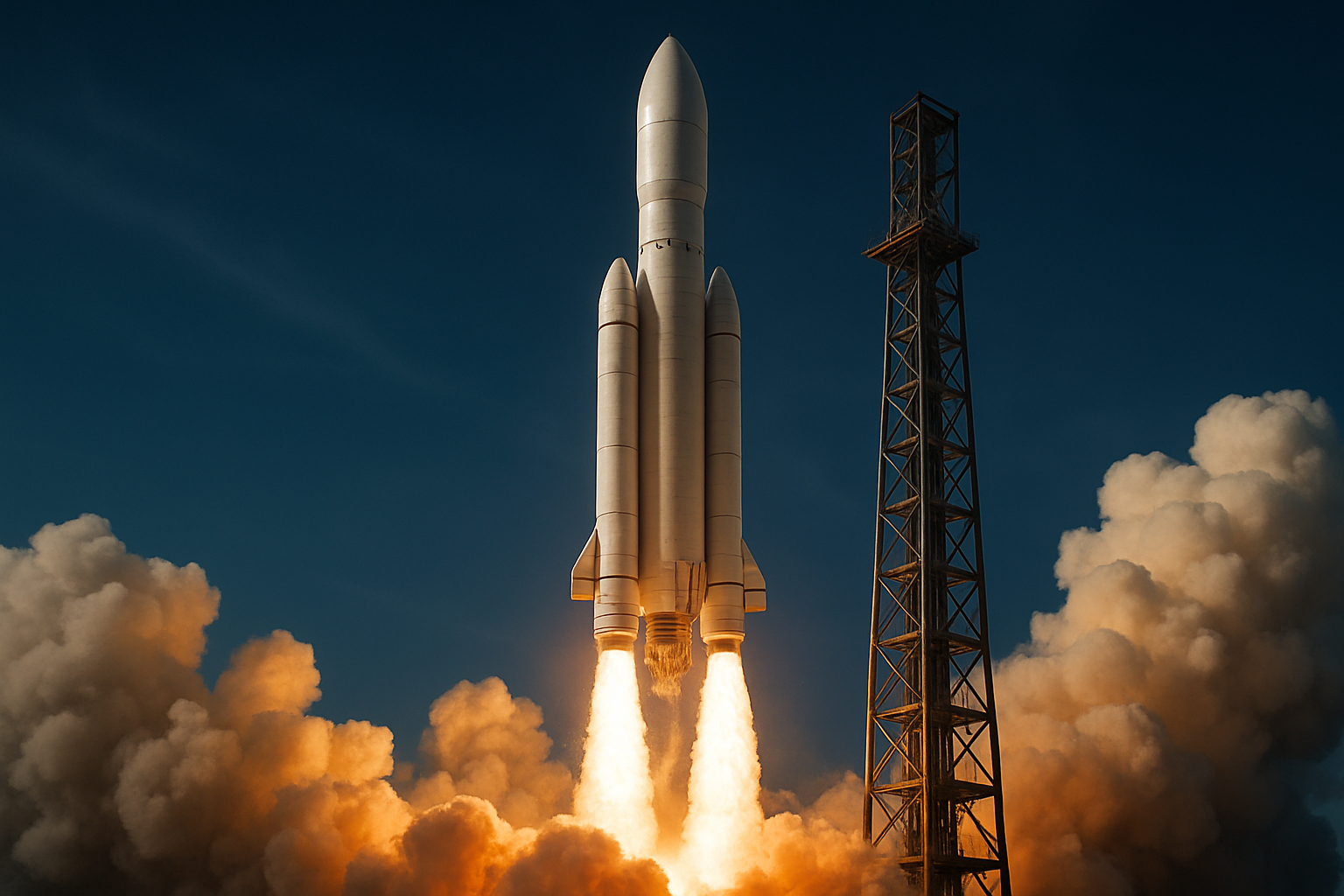
Rockets matter because space exploration is built on a deceptively simple constraint: before anything becomes a mission, it has to escape Earth's gravity. Every satellite network, science probe, crewed journey, and national space strategy depends on that basic fact. Rockets are therefore more than one subsystem among many. They are the enabling technology that makes the rest of the space economy and the broader exploration project possible at all.
That is why a broad explainer about rockets is more than educational filler. It is a reminder that all the glamour of space still rests on a difficult, expensive, and highly engineered act of launch.
Why rockets remain central even as space diversifies
The space sector has become more crowded and varied, with private companies, scientific agencies, communications constellations, and defense missions all sharing the same broad arena. But none of that diversification reduces the importance of launch. In fact, the more ambitious and busy space becomes, the more central rocket reliability and affordability are to the whole system.
This is why the subject matters. Rockets remain the gate through which every space aspiration must pass.
A useful way to frame it is this: no matter how advanced the payload, the space mission still begins as a launch problem.
Why rockets are also about economics and access
Rocket performance is not only a physics question. It shapes cost, cadence, and who can participate in space at all. More capable or more affordable launch systems can expand what is commercially viable, open room for more scientific experimentation, and alter the geopolitical balance around access to orbit. That means rocket development influences who gets to imagine bigger and who has to remain limited by price or dependence.
This is one reason rockets matter beyond engineering circles. They determine whether space remains a narrow domain of a few powerful actors or becomes more operationally accessible to a wider range of institutions.
Why public imagination keeps returning to them
Rockets also matter culturally because they are the most visible symbol of departure from Earth. They condense risk, aspiration, and technological prowess into one dramatic event. Even people who know little about propulsion understand intuitively that the rocket is the moment where possibility confronts physics directly.
That is why the subject matters educationally as well as strategically. Rocket literacy helps people understand what makes space difficult, expensive, and politically meaningful.
In many ways, rockets are where the romantic narrative of space and the hard limits of engineering become inseparable.
What matters next
The key questions are whether launch becomes cheaper without becoming less reliable, how reusable or next-generation systems reshape access, and whether public and private investment keeps pace with expanding ambitions in orbit and beyond. Those answers will define how much of the future space agenda is actually executable.
That is why rockets matter. They are the practical foundation beneath nearly every grand claim made about the future beyond Earth.
Space exploration is often described in terms of destinations. Rockets remind us that the real challenge begins with the ability to leave home repeatedly and on purpose.