
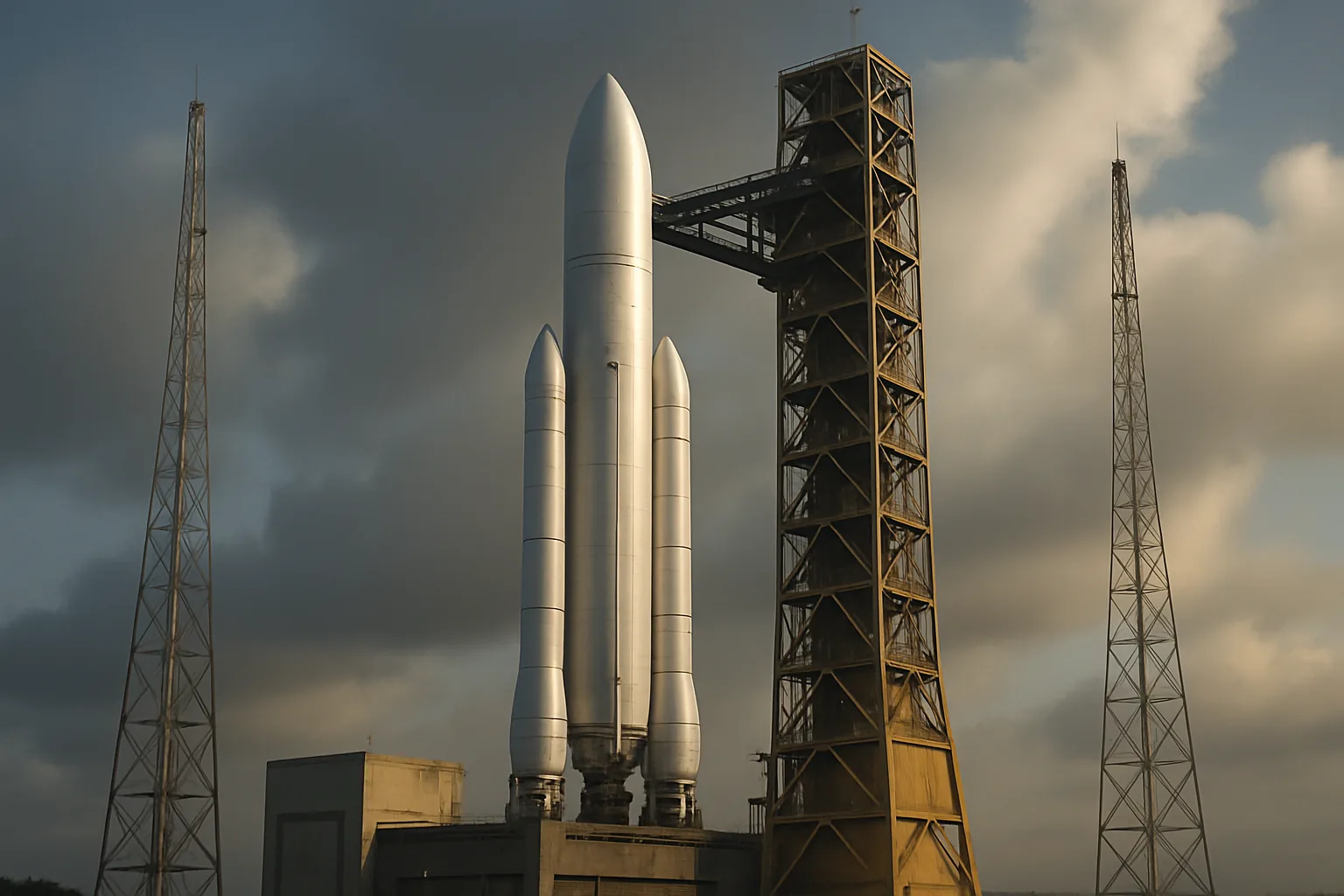
Launcher funding uncertainty matters because launch systems sit at the core of space autonomy. A region that cannot reliably fund, build, and operate its own launch vehicles becomes more dependent on external providers not only for commercial missions but also for strategic flexibility. When Europe's launcher development enters a period of ambiguous support, the problem is bigger than a delayed program or an unresolved appropriations fight. It is a question about whether the political will behind independent access to orbit is deep enough to survive the difficult middle phase between ambition and operational maturity.
That is why the story deserves attention beyond industry insiders. Launch capability is one of the clearest indicators of whether a space power is serious about long-term strategic independence.
Why launch autonomy matters so much
Independent access to orbit shapes everything else in the space ecosystem. Satellite programs, security priorities, commercial planning, and scientific missions all become easier to manage when a region controls at least part of its own launch pathway. Without that capability, even strong satellite or research programs can end up structurally dependent on foreign providers.
This is why funding uncertainty matters. It puts pressure on one of the pillars that make broader space policy credible.
A useful way to frame it is this: a space strategy without a believable launch pathway risks becoming a collection of aspirations tied to someone else's timetable.
Why industrial continuity is part of the risk
Launcher programs are not maintained by rhetoric alone. They require skilled teams, supply chains, testing infrastructure, and contractors capable of surviving long development cycles. Funding instability can weaken those ecosystems even before a formal cancellation or delay is announced, because uncertainty itself makes planning, hiring, and long-horizon investment harder.
This is one reason the story matters beyond politics. Industrial depth is hard to rebuild once it erodes, and launch capability depends on continuity more than occasional bursts of enthusiasm.
Why Europe faces a strategic choice
Europe can rely more heavily on external launch providers in the near term, but doing so may slowly reduce the urgency to sustain a robust domestic launcher base. That tradeoff may look efficient in isolated decisions, yet risky over time if geopolitical or commercial conditions shift. Funding uncertainty therefore forces a more basic question: is autonomous launch capacity still treated as essential, or only as desirable when convenient?
That is why the issue matters. It clarifies how seriously Europe is prepared to treat space as infrastructure rather than as a prestige sector alone.
Strategic autonomy is rarely lost in one dramatic moment. It is often diluted through repeated tolerance for dependency when domestic capability feels expensive or politically awkward.
What matters next
The key questions are whether funding clarity emerges, whether industrial teams remain intact, and whether European institutions articulate a coherent launcher strategy that matches their stated ambitions. Those signals will show whether the current uncertainty is a temporary wobble or a deeper warning.
That is why launcher funding uncertainty matters. It is a test of whether Europe wants to remain a true space power with its own orbital access or a sophisticated participant relying increasingly on outside capacity.
In space policy, the hardest commitments are often the ones that look mundane on a budget line but determine whether autonomy is actually real.