
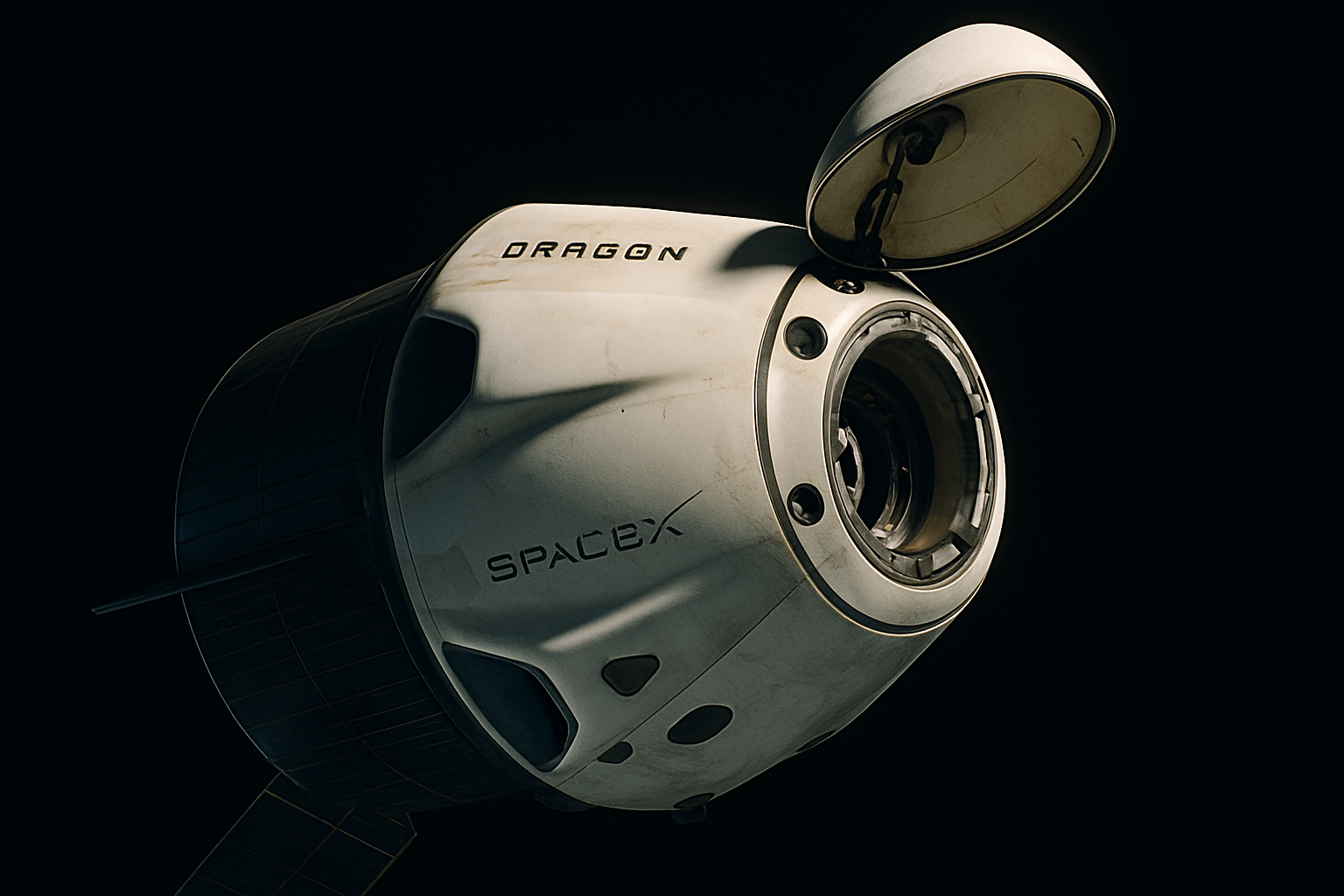
ESA's plan to charter a dedicated Crew Dragon mission to the International Space Station marks a notable step in how the agency approaches astronaut access. Rather than waiting only for seats tied to broader multinational mission planning, ESA is moving toward a flight aligned more directly with its own priorities. That matters because human spaceflight opportunities remain scarce, expensive, and tightly scheduled.
A dedicated mission would give ESA more flexibility in choosing when European astronauts fly and what work they are expected to do once they are on station.
Why a dedicated mission changes the equation
Crew Dragon has already established itself as a reliable transport system for ISS missions. By chartering a dedicated flight, ESA would not just buy access to orbit. It would also gain greater control over crew allocation, mission timing, and how station time is used for European goals. That is a meaningful shift from simply fitting into seats available through other arrangements.
The strategic value is straightforward. More control over mission structure can translate into more predictable planning for astronaut assignments, training, and experiment preparation.
What it means for European research
More frequent or more tailored ISS access can expand the range of scientific work ESA supports in orbit. A mission designed around European participation can create room for experiments, technology demonstrations, and operational experience that might otherwise be delayed by shared mission constraints. For agencies, flight opportunities are not only symbolic. They are also a way to keep research pipelines moving.
That helps explain why the charter matters beyond transportation. It supports the wider scientific and industrial ecosystem tied to European space activity.
Why commercial providers matter more now
The move also highlights how deeply commercial spacecraft have entered the agency planning process. A dedicated Crew Dragon flight would show that government space programs increasingly treat commercial crew systems as mission infrastructure rather than occasional supplements. That changes expectations for partnerships, procurement, and long-term human-spaceflight planning.
For the broader market, the message is clear: commercial systems are becoming central to how agencies create astronaut opportunities and structure mission access.
What matters next
The important follow-through will be execution: whether the mission is finalized on the expected terms, how ESA structures astronaut participation, and what scientific objectives are attached to the flight. Those choices will determine whether the mission becomes a one-off expansion of access or part of a more durable European approach to human spaceflight.
The significance of the plan is that it gives ESA a way to shape orbital access more directly. In a field where schedule control and flight cadence matter, that is a substantive advantage.