
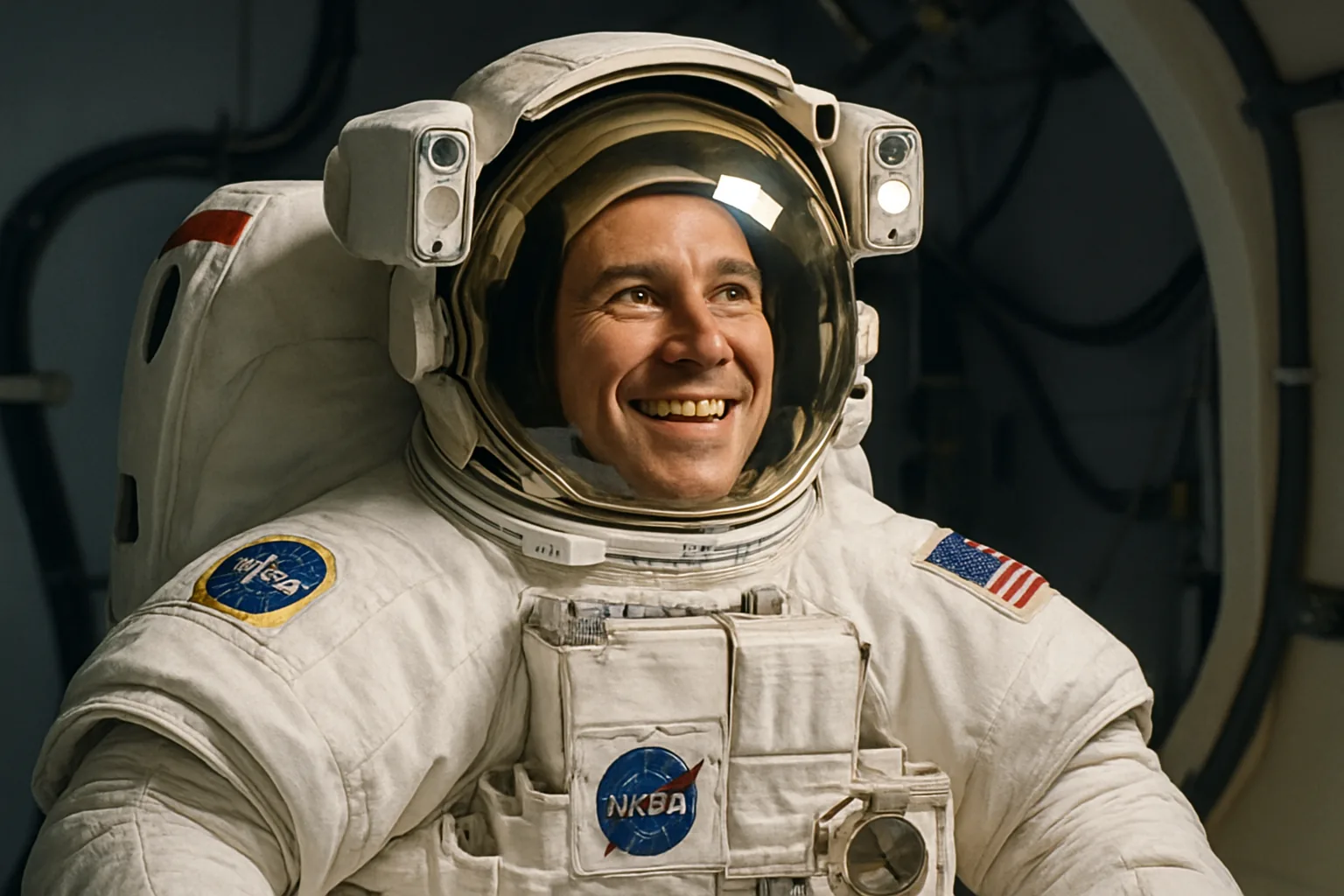
Spacesuit fitting on the International Space Station matters because a suit used for spacewalking is not simply worn. It is inhabited as a pressurized working environment. Every adjustment affects mobility, comfort, fatigue, and ultimately mission safety. In orbit, where astronauts depend on the suit for life support and fine motor performance, fit is not a cosmetic concern. It is part of the engineering of the mission itself.
That is why fitting stories are more important than they may first appear. They reveal how human performance and aerospace hardware have to be aligned with unusual precision. A suit can be technically functional and still create operational problems if it does not fit the wearer correctly over the duration of demanding tasks.
Why fit affects more than comfort
On Earth, poor fit usually means inconvenience. In space, it can mean restricted reach, pressure points, faster fatigue, or reduced dexterity during work that already demands concentration and physical effort. Spacewalks require astronauts to manipulate tools, move along exterior structures, and maintain awareness in a bulky pressurized system. A mismatch between body and suit can quietly raise the difficulty of every task.
This is why suit fitting matters for performance as much as safety. The suit must support work, not merely keep the astronaut alive. A well-fitted system can conserve effort and reduce distraction at exactly the moments when attention is most valuable.
A useful way to frame it is this: fit is the bridge between engineering capability and human capability. Without it, the hardware cannot deliver its full value.
Why the ISS depends on careful preparation
The station is a laboratory, a maintenance platform, and a proving ground for long-duration operations. Extravehicular activity is one of the most demanding parts of that environment, and preparation begins long before the hatch opens. Fitting sessions, component checks, and configuration work are all part of turning a complex suit into something tailored enough for a specific mission profile.
The significance of the fitting process lies in how many variables it controls in advance. When astronauts head outside, there is little room for improvisation. The time invested in preparation is what reduces risk once the work begins.
Why this matters for future exploration
Suit operations on the ISS also matter because they inform the broader future of human spaceflight. Lessons about fit, flexibility, fatigue, and task execution feed into how next-generation suits are designed for lunar missions, commercial platforms, and eventually more distant exploration. Each fitting exercise contributes to a larger body of practical knowledge about how humans function inside protective systems.
That is why the story reaches beyond one crew or one image set. The station remains a place where procedure and design are refined through repetition, and suit fitting is part of that refinement.
In this sense, the work is quietly foundational. Better fitting today can translate into safer and more capable exploration tomorrow.
What the fitting process ultimately represents
The most important point is that spaceflight reliability depends on respecting details that can appear mundane from the outside. A properly fitted suit reflects coordination between engineering teams, medical considerations, mission planners, and astronauts themselves. It turns an advanced machine into a usable environment for real work.
That is why spacesuit fitting on the ISS matters. It shows that successful human spaceflight is built not only on rockets and launch windows, but on careful adaptation of technology to the people who must depend on it completely.
When a spacesuit fits correctly, the achievement is larger than comfort. It means the system is ready to protect, support, and extend human capability where failure is not an option.