
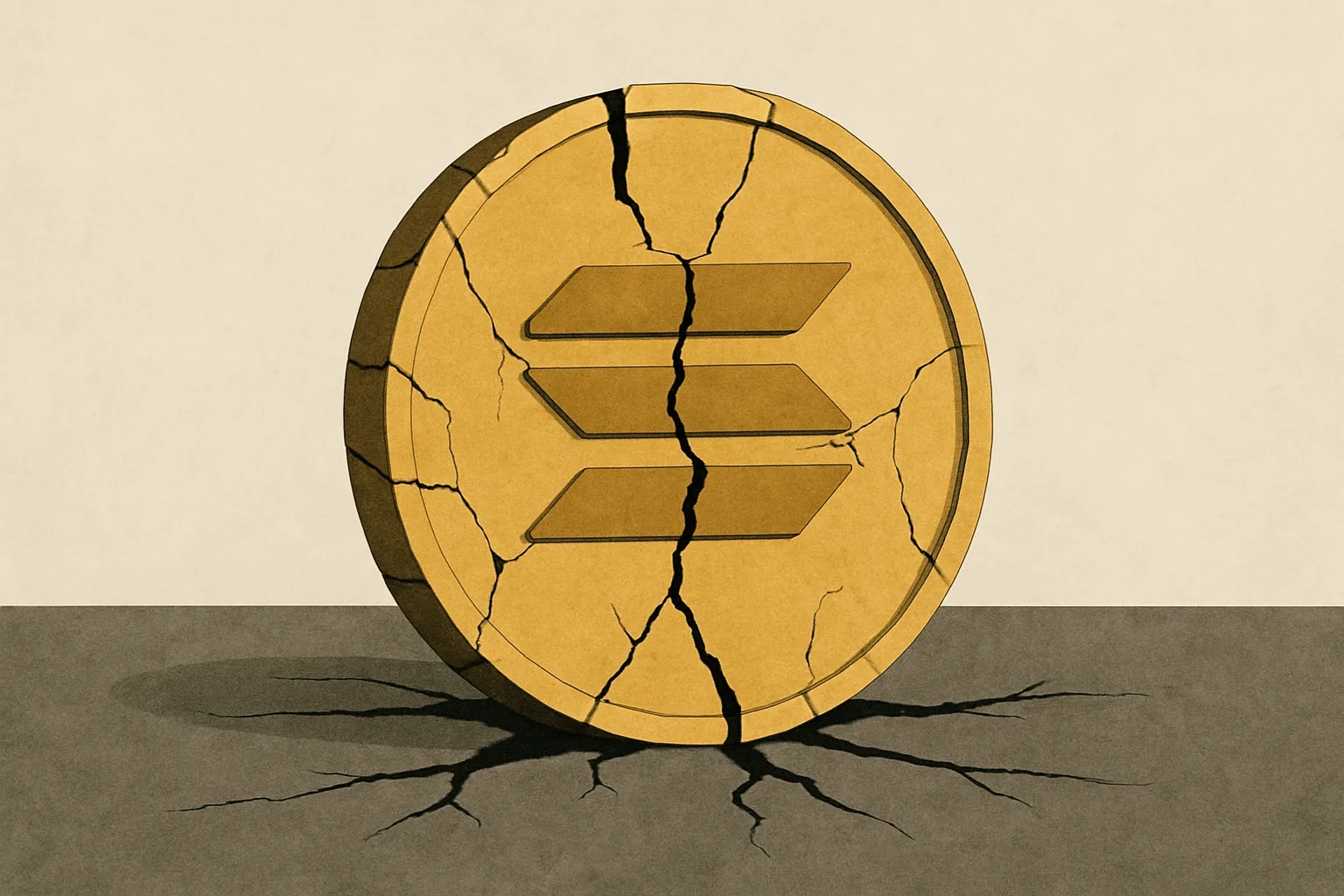
Drift Protocol halted deposits and withdrawals after what it described as an active attack, turning one of Solana’s better-known DeFi venues into the site of the biggest crypto theft reported so far in 2026.
The reported losses quickly widened as investigators pieced together what happened on-chain. Early estimates varied sharply, with CertiK citing roughly $136 million and Arkham putting the theft closer to $285 million. The broader reporting around the incident settled into a higher range, with blockchain trackers and follow-up coverage describing roughly $270 million to $286 million drained across multiple vaults and assets.
That spread matters. In crypto hacks, the first number is often wrong, but the range itself tells you something important: when a protocol loses operational control fast enough, even basic accounting becomes difficult in real time.
What appears to have happened
According to Drift’s public statement, an attacker gained unauthorized access through what the company called a novel attack involving Solana durable nonces. Drift said the exploit led to a rapid takeover of Security Council administrative powers. That is a very different kind of failure from a simple smart contract bug that only affects one pool or one token.
If the reporting holds, the attacker did not just exploit a narrow software flaw and leave. The more serious issue is that administrative authority itself appears to have been compromised. Once that happens, the blast radius grows. Vaults, withdrawals, permissions, and emergency responses all become harder to trust at the exact moment users need clarity.
Blockchain intelligence firm Elliptic said on-chain patterns point to a North Korea-linked attack. That attribution was not presented as courtroom-proof certainty, but it fits a pattern the industry already knows well: sophisticated, high-value crypto thefts that target infrastructure or operational weak points rather than only obvious contract errors.
Why this matters beyond Drift
There are plenty of crypto hacks every year. This one stands out because it appears to combine three things that are especially damaging together: a large dollar loss, possible compromise of governance or admin controls, and immediate interruption of normal user access.
For users, the freeze on deposits and withdrawals is the practical shock. In theory, DeFi promises constant access and transparent systems. In practice, when a protocol is under attack, user experience can start to look a lot like the thing crypto often claims to improve on: assets become hard to move, communication narrows to social posts, and everyone waits for forensic updates.
For Solana, the incident lands awkwardly because Drift is not some obscure side project. It is part of the chain’s trading stack, especially around perpetuals. A large exploit on a recognizable protocol can affect more than the hacked app. It can dent sentiment across related tokens, counterparties, and user behavior, even when the underlying chain is not the direct victim.
That spillover effect is one reason the story matters. The market rarely separates “protocol-specific failure” from “ecosystem risk” neatly in the first 48 hours.
The durable nonce angle is the real warning sign
The technical phrase in Drift’s statement, durable nonces, is easy to skim past. It probably should not be. Durable nonces are a Solana mechanism that can help transactions remain usable beyond a short-lived blockhash window. In ordinary use, that is operationally useful. In the wrong hands, a feature meant to support reliability can become part of a more dangerous attack path.
The core lesson is not that durable nonces are inherently unsafe. It is that operational convenience in blockchain systems often creates hidden security assumptions. If an attacker can exploit those assumptions around admin authorization, they may not need to break the whole protocol in a conventional way. They only need to get close enough to the controls that matter most.
That is a harder problem than auditing a single contract. It pushes attention toward governance design, signer procedures, transaction preparation, and emergency permissions, areas that tend to sound boring right until they become the entire story.
A concrete example of the business risk
Imagine a trader using Drift as a primary venue for leveraged positions on Solana assets. That trader may not care about governance architecture day to day. What matters is execution, collateral, and the ability to move funds in or out.
Now put that same trader into this week’s situation: deposits and withdrawals are suspended, estimates of losses are still moving, and the protocol says admin powers were rapidly taken over through an unusual attack path. Even before any final loss accounting, the platform has already stopped functioning as a normal trading venue for that user.
That is why incidents like this hurt beyond the stolen amount. The economic damage includes interrupted activity, shaken confidence, and a repricing of what users thought the platform’s operational safeguards actually were.
What the hack says about 2026 crypto risk
The early description of the Drift exploit as the largest DeFi hack of 2026 so far is not just a leaderboard detail. It suggests that crypto’s biggest weaknesses still sit where code, governance, and operations overlap.
Last year, security firms said North Korea was responsible for the largest share of crypto thefts, with stolen funds reaching into the billions. Those attacks have tended to reward patience, operational sophistication, and an ability to exploit trust assumptions around systems that are marketed as trust-minimized.
Drift fits that uncomfortable pattern. The story is not only “DeFi got hacked again.” It is that a mature, visible platform in a major ecosystem may have been compromised through a route tied to administrative control. That should worry every protocol that believes audits alone are enough.
What to watch next
The next phase of this story is less about the headline loss number and more about recovery details.
- Whether Drift can explain the attack path clearly enough for users and counterparties to judge what failed.
- Whether any of the stolen assets can be frozen, tracked, or recovered through exchanges and security partners.
- Whether the incident leads other Solana protocols to revisit how admin actions are authorized and staged.
- Whether the suspected North Korea link is strengthened by later forensic evidence.
There is also a narrower question with broad implications: how many other protocols rely on operational patterns that look safe during normal market conditions but become dangerous when an attacker targets transaction authorization itself?
That question will outlast Drift’s immediate crisis. If the exploit did hinge on pre-authorized or nonce-based administrative actions, this will not be remembered only as a big theft. It will be remembered as a case study in how crypto platforms can remain technically decentralized in branding while still failing at the exact control points that matter most when something goes wrong.
For readers outside crypto, the cleanest takeaway is simple. When a platform can be forced to freeze user access after admin powers are compromised, the real issue is not just stolen tokens. It is the fragility of the operating model underneath them.