
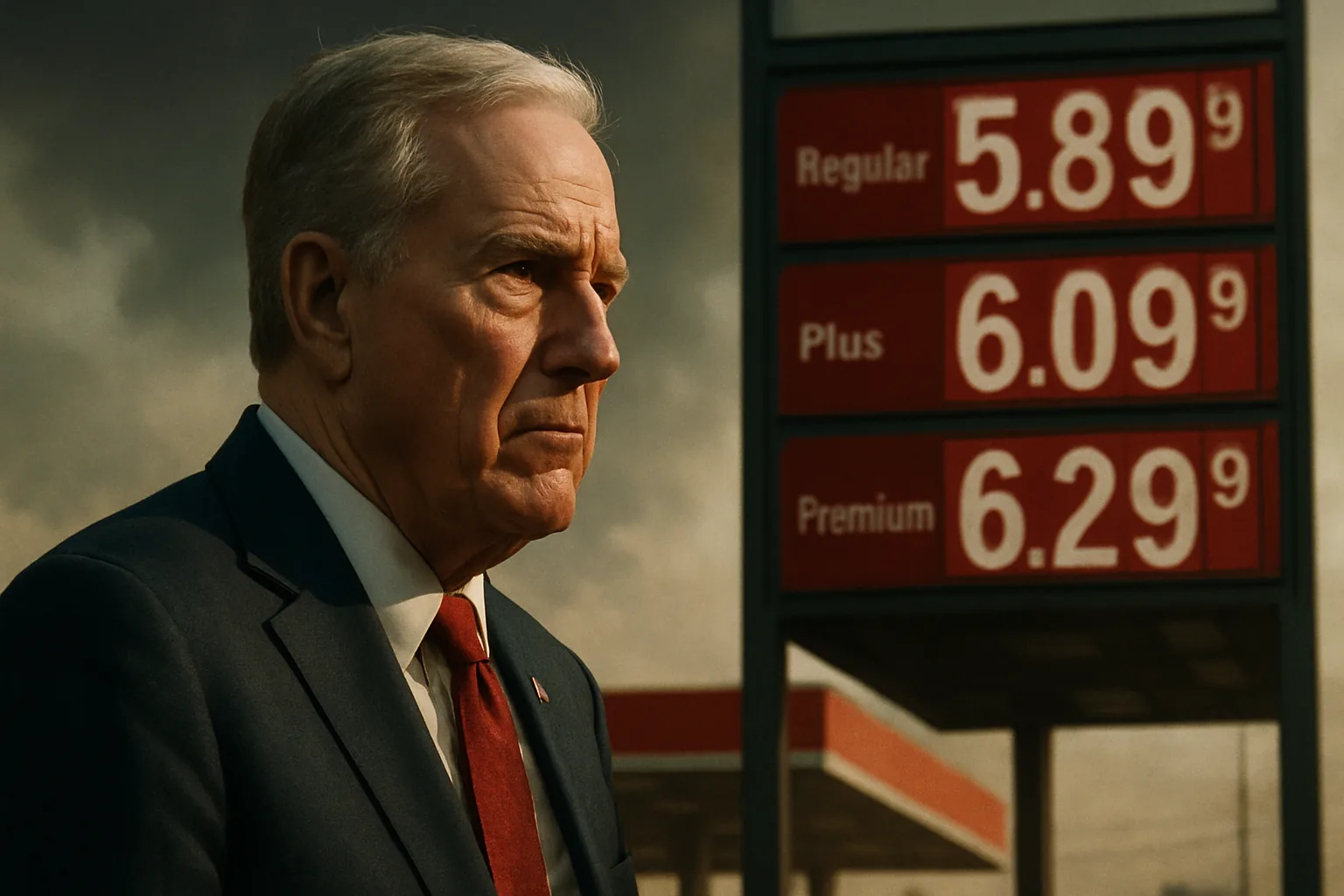
Political ad campaigns built around gas prices matter because few economic signals are felt as immediately or repeatedly as the cost displayed at the pump. Voters may not track tariff schedules, monetary policy, or complex fiscal choices, but they do register rising fuel prices as a recurring reminder that something in the economy feels less manageable. That is why the Democratic Congressional Campaign Committee's decision to geotarget voters over gas costs is strategically coherent even before one asks whether the blame assignment is fair.
The significance lies in the translation. Campaigns often struggle to convert broad economic narratives into something vivid enough to move people. Gas prices solve that problem by being both concrete and emotionally legible. They allow parties to attach a national argument about leadership and competence to a cost voters encounter personally and often.
Why fuel prices are such potent campaign material
Fuel has a special political quality because it operates as both an economic indicator and a daily irritant. It affects commuting, family budgets, delivery costs, and the general sense of whether life is becoming more expensive faster than wages can keep up. That breadth gives campaigns a ready-made symbol around which to build blame and urgency.
This is why gas-price politics recurs so reliably. It condenses a sprawling economic story into something visible enough to fit inside a short ad and familiar enough to feel true before any policy explanation is offered.
Why geotargeting changes the tactic
Targeted digital advertising matters because it lets campaigns turn a national issue into a local pressure point. Rather than making one generic argument everywhere, parties can tailor the message to places where fuel costs, commuting patterns, or partisan competition make the emotional effect sharper. This increases the chance that the broader economic story feels personally relevant rather than abstractly partisan.
It also shows how modern campaigns think. They are not only broadcasting claims. They are distributing different emotional intensities based on geography and voter behavior.
A useful way to frame it is this: geotargeted economic ads work by converting a national anxiety into a local grievance with a named political villain.
Why the policy attribution is often messy
Of course, fuel prices are shaped by global supply conditions, geopolitical shocks, refining issues, and market expectations as much as by any single party's policy choices. But campaigns do not need perfect causal clarity. They need a persuasive chain of responsibility that feels intuitive enough to survive complexity. Rising prices create the opening; campaign messaging decides who is invited to occupy the blame.
This is where economic storytelling becomes more powerful than economic explanation. Voters rarely demand complete precision if the argument aligns with what they are already feeling.
What to watch next
The key questions are whether Republicans can redirect blame successfully, whether gas prices remain salient long enough to sustain the narrative, and whether the DCCC's local targeting improves message efficiency in competitive districts. If the pain persists, the political utility of the campaign likely will too.
That is why this move matters. It shows how parties use visible consumer prices to turn diffuse frustration into a sharper electoral weapon.
In campaign politics, the most effective argument is often the one voters think they can see every week with their own eyes.