
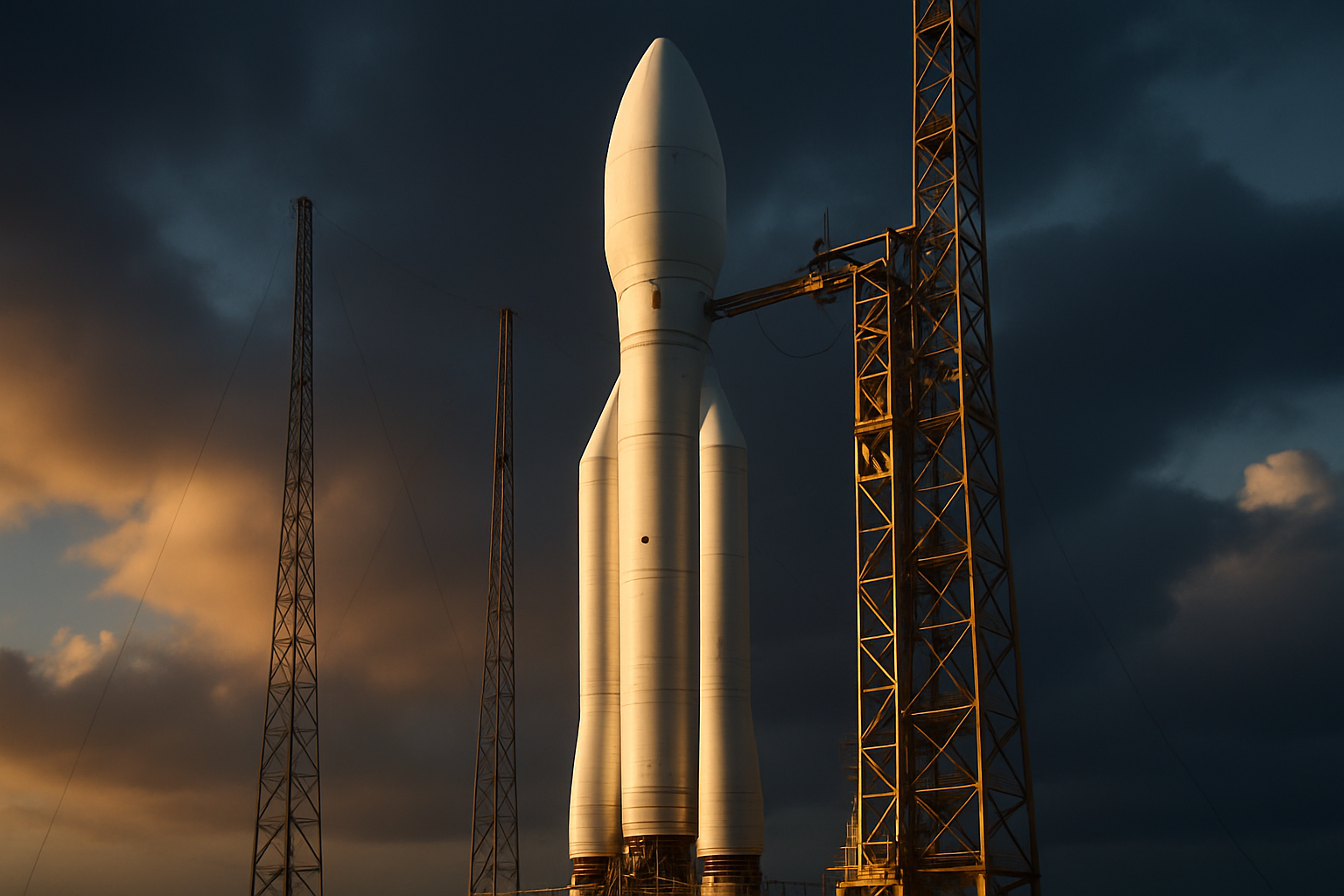
A launch countdown matters because it is the point where scientific ambition becomes operational reality. For a mission like SMILE, the significance is not only that a rocket is nearing liftoff. It is that years of planning, engineering, international cooperation, and scientific expectation are moving toward the moment when theory finally has a chance to become data. Missions devoted to space science depend heavily on patience, and the countdown is one of the few moments when that patience becomes visible to a wider public.
That visibility matters because science missions often spend most of their lives in relative obscurity before suddenly becoming legible as a concrete event. The countdown helps people understand that a mission is no longer an abstract proposal or technical exercise. It is a near-term scientific instrument on the edge of beginning its work.
Why SMILE’s science case matters
Space weather and the interaction between the solar wind and Earth's magnetosphere have real scientific and practical importance. These processes shape auroral activity, affect satellites, and influence the broader environment through which modern technological systems operate. A mission designed to study that interaction systematically matters because it deepens understanding of a dynamic relationship that is both scientifically rich and operationally relevant.
This is why the countdown matters. It marks the approach of a mission whose value lies not in spectacle but in observation that could refine how we understand Earth's place inside solar activity.
A useful way to frame it is this: the launch matters because the science cannot begin in earnest until the observatory is where the questions can actually be asked.
Why international coordination is part of the story
Many modern science missions are also tests of international cooperation. They require institutions across borders to align technical standards, timelines, funding, and scientific objectives. As launch nears, the mission becomes proof that this coordination can survive the long lead times and complexities of advanced space science.
This is one reason SMILE matters beyond its payload. It represents a model of how ambitious research can be pursued through cross-border collaboration rather than isolated national effort.
Why countdowns influence public and institutional trust
Approaching launch has a signaling function. It reassures funders, scientific communities, and the public that the years of investment are turning into something tangible. Delays are common in spaceflight, so a stable countdown can help restore confidence that a mission remains on track and worth sustained support.
That is why the story matters beyond mission operations. A countdown is also an institutional message: this project is real, it is nearly ready, and the promises attached to it are about to face the test of execution.
For science programs, these moments matter because credibility is built one successful milestone at a time.
What matters next
The key questions are whether launch proceeds cleanly, whether commissioning goes smoothly, and how quickly the mission begins producing useful scientific returns. Those early stages will shape whether the countdown is remembered as the start of a productive observatory or just another tense prelaunch phase.
That is why SMILE's launch countdown matters. It is the visible threshold between a mission imagined and a mission capable of contributing to real scientific understanding.
Before a space-science mission changes how we understand the Sun-Earth system, it first has to prove that years of preparation can survive the transition into flight.