
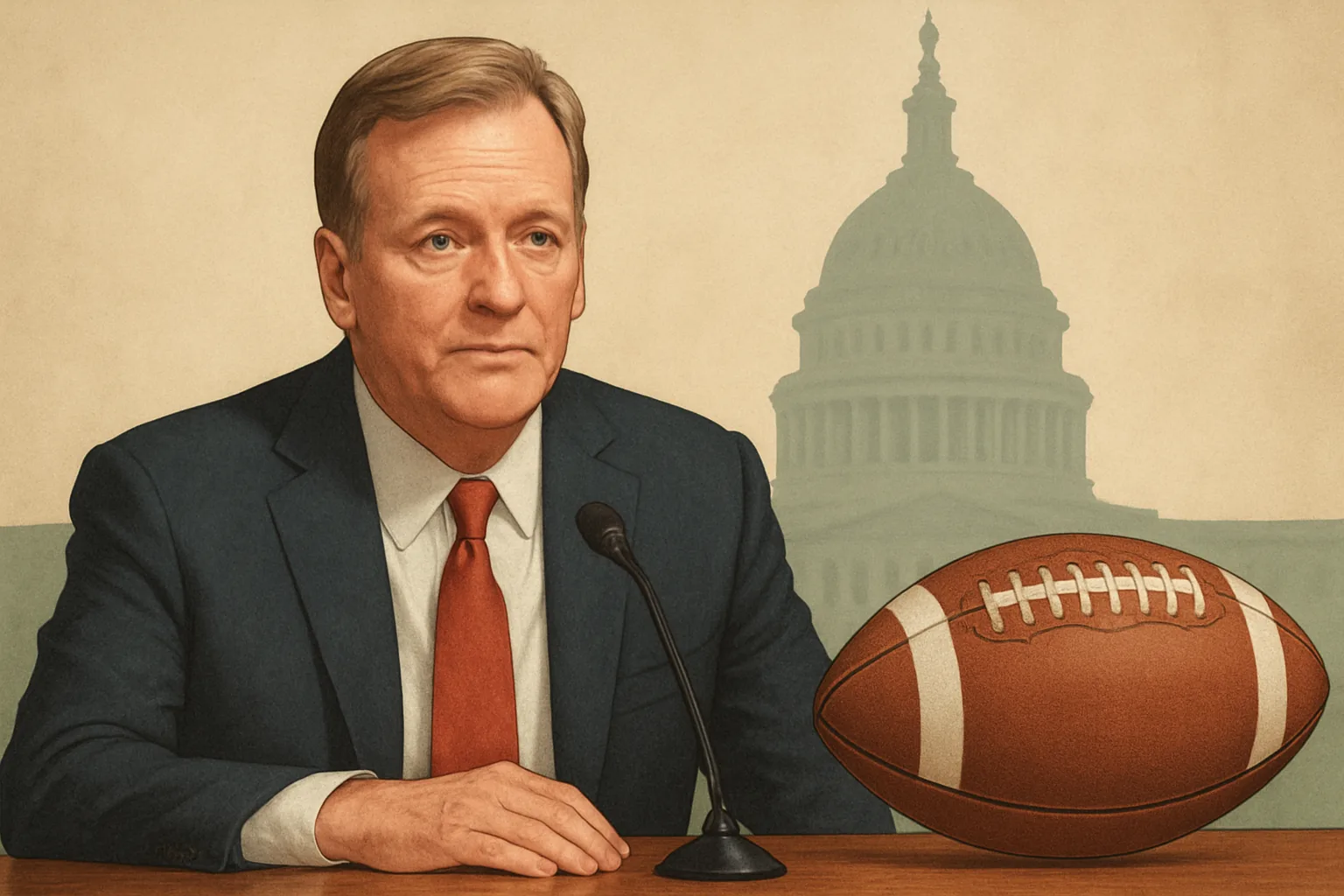
House Judiciary Chair Jim Jordan has invited NFL Commissioner Roger Goodell to testify at a June 10 hearing on whether the league’s media deals still fit within the limits of the Sports Broadcasting Act of 1961, especially as more games move behind streaming paywalls.
The invitation, sent Monday, comes as the NFL faces broader federal attention over how it packages and sells game rights. The league’s recent use of Prime Video, Peacock and Netflix for exclusive games has turned a long-running sports media question into a more immediate consumer issue: when does a shared national sports product become too fragmented for fans to follow without paying several companies?
What Congress Is Examining
The Sports Broadcasting Act gives professional sports leagues a limited antitrust exemption. In practical terms, it allows leagues to pool media rights and negotiate as one seller, rather than forcing every team to cut its own separate broadcast deals. That structure helped create the modern national sports television model.
But the exemption is narrow. The law applies to broadcast networks, and courts have previously held that it does not extend to cable, satellite or streaming distribution. That distinction matters because the NFL’s media strategy now includes a mix of traditional broadcast television, cable, and exclusive streaming windows.
Jordan’s letter said the hearing will examine whether the exemption has been used by professional sports leagues in ways that harm consumers and whether Congress should consider legislative remedies. Goodell may decline the invitation, according to coverage of the request, but the hearing can still sharpen pressure on the league and its media partners.
Why Streaming Changes the Consumer Math
For decades, a fan could follow most high-profile NFL games through a relatively familiar bundle: local broadcast affiliates, national network windows, cable channels, and a few premium packages for out-of-market games. That system was not free, and it was not simple. But the core Sunday product remained broadly tied to television infrastructure many households already had.
Streaming changes the experience because the access points are narrower. A game shown exclusively on a subscription service is not simply another channel in the lineup for many viewers. It can mean a new account, a separate bill, a different app, a device compatibility question, and sometimes a short-term subscription for one game.
A concrete example makes the issue plain. A family that watches its local team on broadcast television most Sundays may suddenly need a Peacock subscription for one playoff game, Prime Video for a Thursday night matchup, and Netflix for a holiday game. Each individual deal may be defensible as a business decision. From the fan’s side, the season starts to look less like one national sports schedule and more like a set of locked doors with different keys.
That is the consumer harm Congress is likely to probe: not whether streaming is legal or useful, but whether the NFL is benefiting from a broadcast-era antitrust exemption while pushing valuable games into distribution channels that the exemption does not clearly cover.
The Legal Tension Is Narrow but Important
The NFL’s position has long depended on collective selling. A single national media package is more valuable and more orderly than 32 teams independently negotiating every major broadcast window. The Sports Broadcasting Act made that kind of collective negotiation possible for broadcast television.
The unresolved political question is whether that bargain still works when the most attractive games can be carved out for streaming platforms. If the law was designed to support broad public broadcast access, exclusive streaming windows test the outer edge of that compromise.
This is not the same as saying the NFL has violated the law. The key point is more precise: the old statute does not map neatly onto today’s market. Congress can ask whether the exemption should be narrowed, expanded, conditioned, or updated. Regulators can examine whether specific rights deals raise competition concerns. Consumers mainly want to know why watching the same sport now requires more paid services.
Why the NFL Is a Special Case
Every major entertainment company is trying to shift valuable programming toward streaming. The NFL is different because live football remains one of the few media products that can still gather a mass audience at a scheduled time. That makes NFL rights unusually powerful for broadcasters, streamers, advertisers and device platforms.
For streamers, an exclusive NFL game is not just content. It is a customer acquisition tool. A regular drama series may build loyalty over time; a playoff game or holiday game can make fans sign up immediately. That gives the league leverage to command major deals, but it also makes the access question more politically visible.
The public-policy tension is simple enough to understand. The NFL has been allowed to coordinate media rights because a league needs common scheduling and shared presentation to sell a coherent sports product. But when that coordinated power helps move games into separate subscription environments, lawmakers can argue that the exemption is no longer only supporting access. It may also be supporting scarcity.
What Could Happen Next
A congressional hearing does not automatically change NFL media rights. It can, however, create a record, force public explanations, and give lawmakers a venue to test possible changes to the Sports Broadcasting Act.
The most realistic outcomes to watch are practical rather than dramatic:
- More disclosure pressure: lawmakers may ask the NFL to explain how it weighs consumer access when assigning games to exclusive streaming partners.
- Legislative proposals: Congress could consider updating the 1961 law to address streaming, either by limiting the exemption or defining new conditions for it.
- Regulatory momentum: parallel scrutiny from the Justice Department and the Federal Communications Commission could keep attention on how sports rights are bundled and distributed.
- Strategic caution by the league: even without a new law, public pressure may affect how aggressively the NFL expands exclusive streaming windows.
The hearing also gives both parties a consumer-friendly issue. Fans who dislike buying extra subscriptions are easy to understand politically. The harder work is designing a remedy that does not accidentally make sports rights more chaotic, reduce national availability, or push costs into some other part of the media bill.
The Real Question for Sports Media
The Goodell invitation is about the NFL, but the stakes reach across sports media. If Congress decides that old broadcast exemptions cannot be used comfortably in a streaming-first marketplace, other leagues will have to watch closely. Baseball, basketball, hockey and college sports all depend on media-rights structures that are being reshaped by streaming economics.
The question is not whether games should appear online. They already do, and younger viewers increasingly expect that. The more important question is whether the biggest sports leagues can keep the legal benefits of collective broadcast-era bargaining while distributing marquee events through a growing list of paid digital gates.
That is why a single hearing invitation matters. It puts the NFL’s most profitable media strategy next to a 65-year-old statute and asks whether the bargain still serves fans, not just leagues and platforms.