
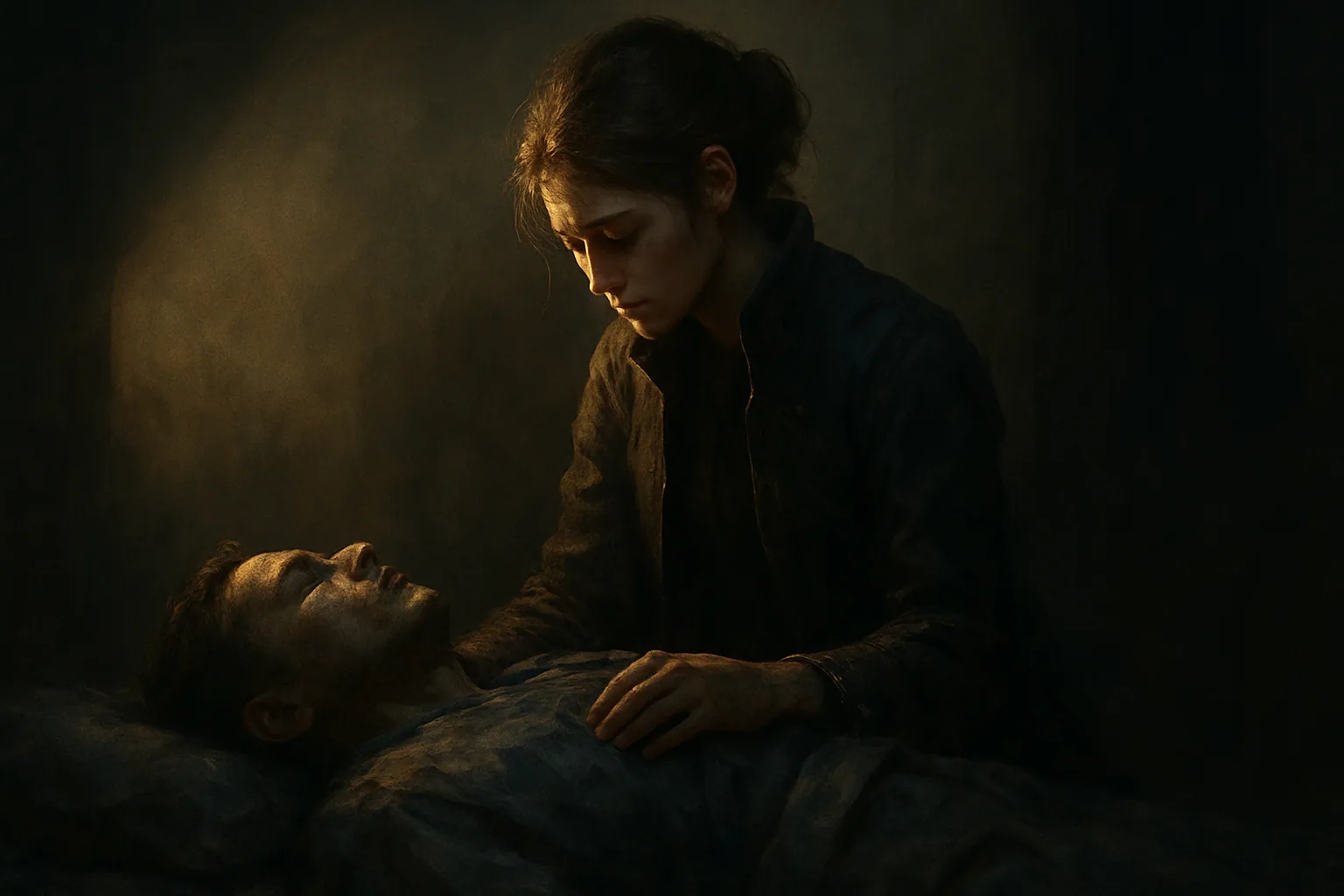
Many games talk about grief, but far fewer build their design so that players feel entangled in it. That is what makes Clair Obscur: Expedition 33 an interesting case. The ambition is not just to tell a sad story or to place tragic events around the player. It is to make the player experience the emotional cost of the narrative in a more complicit, first-hand way.
That is a difficult goal because games are interactive systems before they are dramatic performances. The risk is that grief becomes ornamental, a layer of dialogue or visual mood placed over familiar mechanics. If Clair Obscur succeeds, it will be because the game has found a way to make action, timing, and player involvement reinforce loss instead of merely accompanying it.
Why participation changes the emotional effect
When a player simply watches a tragic event, the emotional response can still be strong, but it remains fundamentally observational. Participation changes that. If the game arranges events so the player must help trigger, witness, or fail to prevent key moments, then grief starts to feel less like authored sadness and more like consequence inside the player's own path through the story.
That is what the idea of “complicity” gets at. It does not mean the player becomes morally guilty in a literal sense. It means the game removes some of the comfortable distance that usually separates audience and tragedy. The player is not only receiving emotion. They are implicated in how it arrives.
Why RPGs are well-suited to this kind of storytelling
Role-playing games have a structural advantage here because they already ask players to invest in parties, choices, progress systems, and long stretches of shared time with characters. That creates the kind of attachment grief needs in order to land. Loss matters more when the player has built habits, expectations, and a sense of mutual journey around the people affected.
This is one reason a story-focused RPG can do more with grief than a faster, more disposable format. It has time to create relational weight before it asks the player to carry emotional cost. Without that weight, sadness can feel abrupt or manipulative. With it, the same moment can feel devastating.
A useful comparison is the difference between reading a tragic headline and losing someone from a group you have traveled beside for dozens of hours. Interactivity magnifies that difference.
Why this approach is artistically risky
Designing grief as something participatory is compelling, but it is also dangerous. If handled too bluntly, it can feel contrived, as though the game is trying to force importance onto moments that have not earned it. If handled too lightly, the ambition disappears and the story collapses back into familiar dramatic shorthand.
That is why writing and mechanics have to align closely. The player's actions, the pacing of revelations, and the emotional consequences all need to feel like parts of the same design language. Otherwise the game can end up saying something profound while making the player do something emotionally unrelated.
What to watch when the game arrives
The key question is whether Expedition 33 can sustain this philosophy beyond one or two showcase twists. A lot of games have a single “serious” scene. Far fewer organize their whole narrative experience so that emotional involvement accumulates and changes how the player interprets their own role in the world.
If Clair Obscur manages that, it will stand out not just as a moving RPG but as a good example of how interactivity can deepen rather than dilute difficult emotions. That is a meaningful challenge for the medium. Games often excel at agency and spectacle. They are still learning how to turn agency into vulnerability.
That is why the project has drawn attention. It is trying to make grief feel like something the player cannot merely observe from a safe seat. It wants grief to feel lived through, and that is a much harder artistic target than simply making a scene sad.