
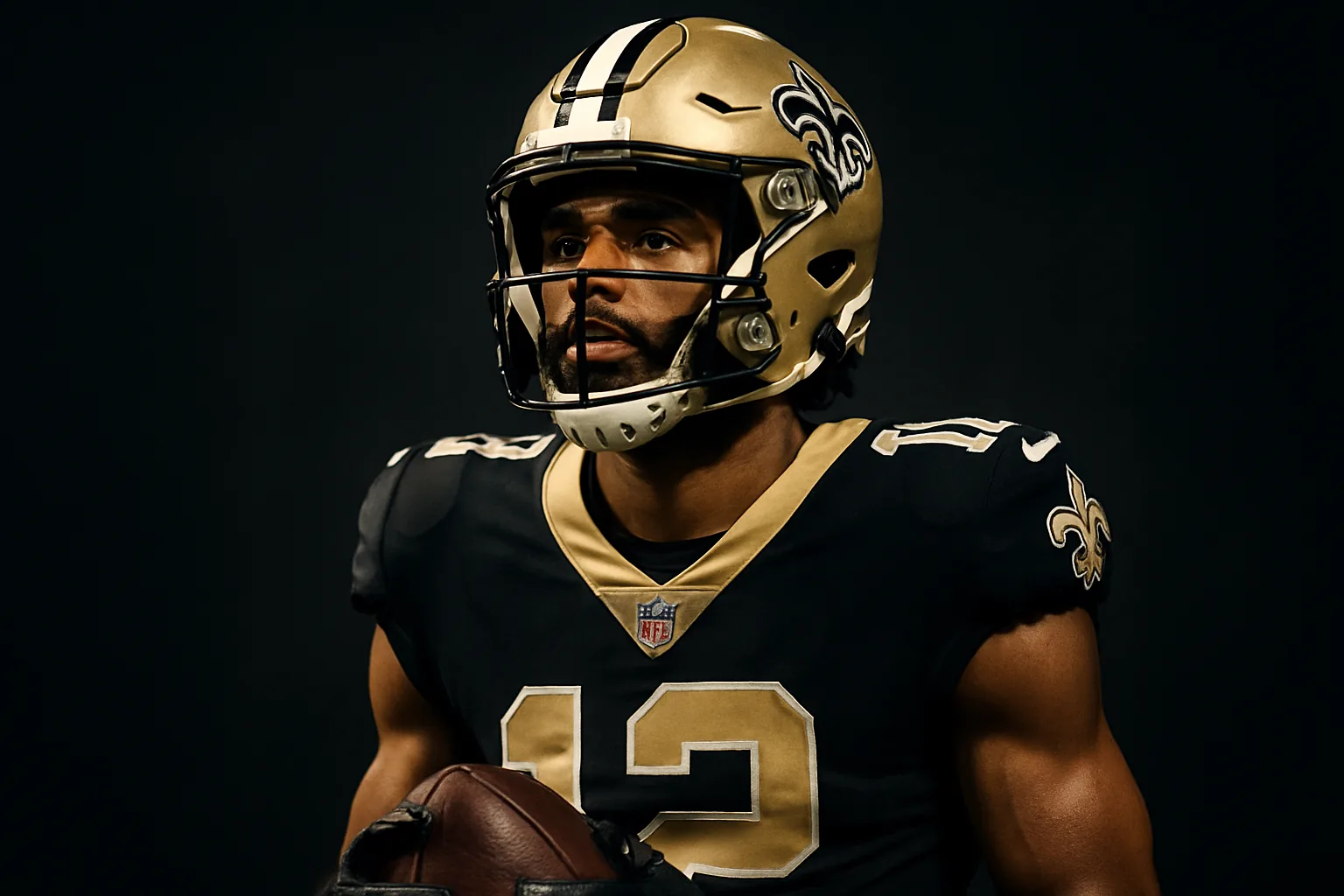
Chris Olave's contract outlook matters because wide receiver pricing now behaves like a chain reaction. Once a few young stars reset expectations, the next comparable player is immediately drawn into a new bracket of value whether his own negotiation has started in earnest or not. That makes every major extension around the league relevant to him before a single formal offer is public.
This is why recent deals for top receivers are more than isolated headlines. They create momentum in the market. Teams, agents, and fans begin recalibrating what a player of Olave's age, production level, and offensive importance should cost, and the answer usually rises faster than organizations would prefer.
Why the receiver market keeps escalating
The modern NFL treats wide receiver as an engine position rather than a luxury one. Passing efficiency drives the league, and a true No. 1 target can shape coverage, protect quarterback investment, and raise the floor of an entire offense. Once teams believe a player can anchor that role for years, they are paying for structural importance, not just box-score output.
That is why the market can move so aggressively. Organizations are not only rewarding production. They are pricing the difficulty of replacing a player who helps define the offense's identity.
Why Olave sits naturally in this conversation
Olave belongs in the next-deal conversation because his value is not hard to explain. He is young enough for teams to imagine multiple prime seasons ahead, productive enough to justify serious money, and important enough to his offense that waiting only increases leverage on the player's side if performance remains strong. That is exactly the kind of profile that gets expensive quickly.
It also matters that the league now tends to reward anticipatory certainty. Teams often prefer to extend a receiver before another year of production raises the number again. If they wait too long, the market teaches them the lesson more harshly.
A useful way to frame it is this: in the current NFL, a receiver like Olave is not priced only against his own résumé. He is priced against the fear of what the market will cost tomorrow.
Why team context still shapes the final number
Even in a hot market, team situation matters. Cap structure, quarterback timeline, and the offense's dependence on one player can all push negotiations higher or lower. If a team sees the receiver as a genuine pillar of the next competitive window, it is more likely to accept a deal that looks aggressive today in order to avoid something worse later.
That is the strategic tension here. A big extension can feel expensive in the short term and still be rational if the alternative is public uncertainty, delayed resolution, and a more expensive market twelve months from now.
What to watch next
The most important signal will be whether the Saints move early or let the market continue building around Olave. Early action would suggest the team wants cost certainty and views him as foundational. Delay would invite speculation that the organization is still measuring how high it is willing to go.
Either way, the core point is already clear. Olave's deal is not being negotiated in a vacuum. It is part of a wider league trend where young elite receivers are increasingly valued as central offensive infrastructure.
That is why the conversation matters now. The number may not be final yet, but the pricing logic around him is already moving.