
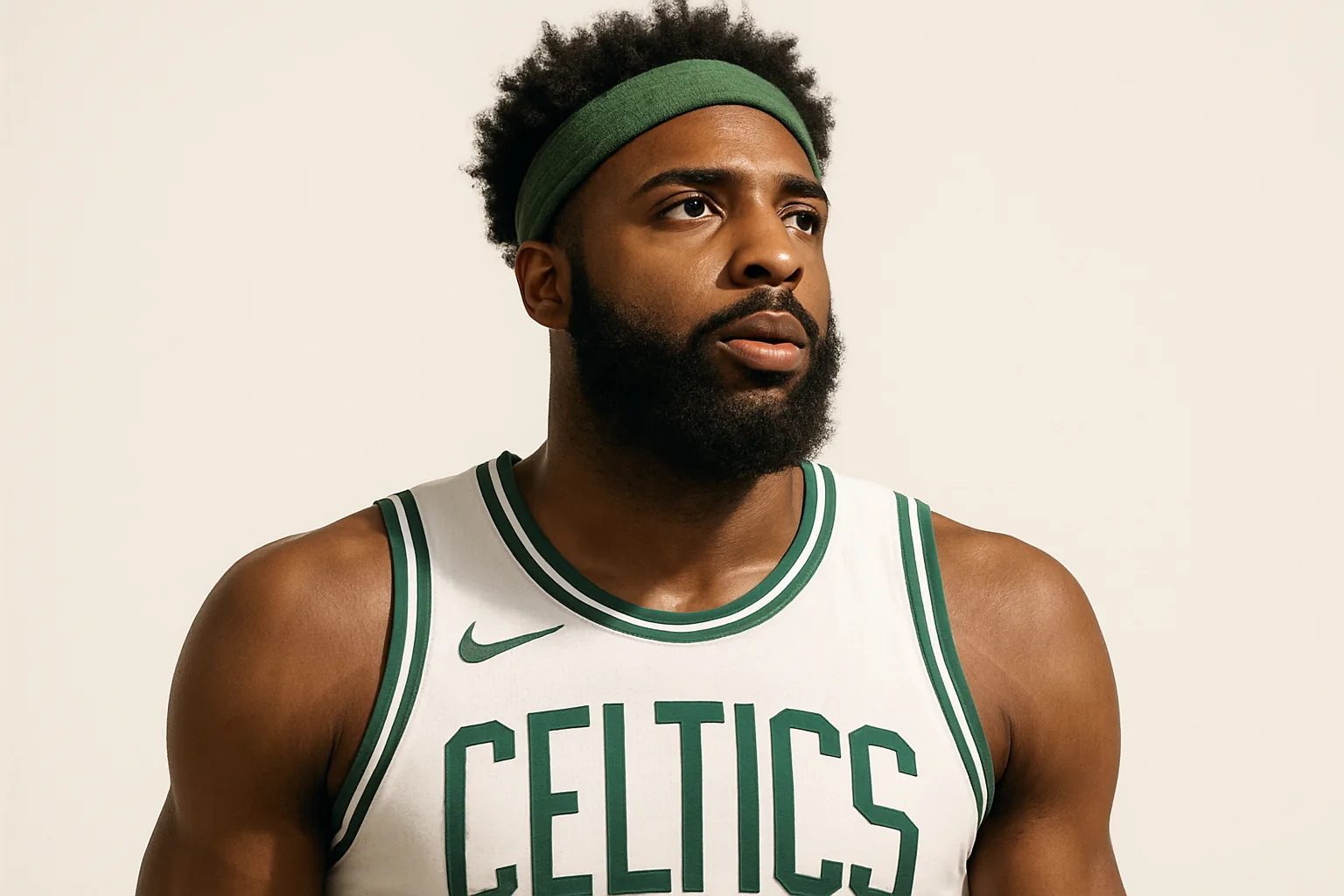
The Celtics moved quickly after the NBA’s free agent negotiating period opened, reportedly agreeing to a three-year, $47.4 million contract with center Mitchell Robinson.
According to the Boston.com report, citing ESPN’s Shams Charania, the deal includes a player option in the third year. Robinson, 28, joins Boston after spending his NBA career with the Knicks, who selected him in the second round of the 2018 NBA Draft.
The agreement came on the same day Boston was also reported to have added veteran guard Mike Conley Jr. on a one-year deal. But Robinson is the more revealing roster move because of what he addresses directly: size, offensive rebounding, and shot-blocking.
Why Robinson Fits A Specific Celtics Need
Robinson is not being brought in to stretch the floor, run offense through the elbows, or reinvent Boston’s attack. His value is more direct. He gives the Celtics a center whose best work comes near the rim, especially on possessions that are usually difficult to manufacture in playoff games.
That matters because championship-level teams often spend the regular season building elegant systems, then spend May and June surviving the parts of basketball that are less elegant: missed shots, loose balls, second chances, foul trouble, and defensive possessions that break down late in the clock.
Robinson’s appeal is tied to those moments. An elite offensive rebounder can change the math of an offense without needing plays called for him. A shot blocker can clean up mistakes on the perimeter and make drivers think twice before attacking the basket. Neither skill guarantees playoff success, but both are easier to understand in a seven-game series than in a highlight package.
The Contract Says Boston Wanted More Than A Backup
A three-year deal worth a reported $47.4 million, with a player option in the final season, is not a casual depth signing. It is a meaningful investment in a frontcourt role.
That does not mean Robinson must become a primary star. It means Boston is paying for a specialist whose strengths are valuable enough to shape lineups and matchups. For a team defending a title-level standard, the move suggests the Celtics wanted a more forceful interior option rather than relying only on smaller lineups or more offense-first combinations.
The player option also matters. It gives Robinson some control if the fit works and his market improves, while Boston gets at least a near-term answer at a position where postseason margins can get uncomfortable fast.
A Practical Example: What Changes In A Playoff Possession
Imagine Boston has a late-game possession where a wing misses a contested three. Without a strong offensive rebounder, the possession is over and the opponent can run. With Robinson on the floor, the defense has to account for him crashing from the dunker spot or weak side.
Even if he does not grab the rebound, he can force an extra body into the paint. That can delay the outlet pass, create a tip opportunity, or open space for another Celtic to recover the ball. One extra possession in a playoff game is not a philosophy. It is a point swing.
The same idea applies defensively. If a guard gets beaten at the point of attack, Robinson’s presence around the rim gives Boston a second line of resistance. That can turn a layup into a floater, a pass, or a blocked shot. The value is not only the block itself. It is the hesitation he can create.
The Broader Roster Signal
Boston’s reported additions of Robinson and Conley point in different directions but share one theme: the Celtics are not treating free agency as a search for a single headline move. They are targeting specific pressure points.
Conley, on a reported one-year deal, fits the veteran guard profile: steadiness, experience, and backcourt support. Robinson fits the physical profile: size, rebounding, rim protection, and frontcourt edge.
That combination is important because teams coming off deep runs often face two problems at once. They need enough continuity to preserve what already works, but they also need enough adjustment to avoid becoming predictable. Adding Robinson is a more physical answer to that second problem.
For Boston, the practical implications are clear:
- Lineup flexibility: Robinson gives the Celtics another way to play bigger without asking a wing or forward to absorb center minutes.
- Possession control: Offensive rebounding can help Boston survive cold shooting stretches without changing its offensive identity.
- Defensive insurance: Rim protection reduces the cost of perimeter breakdowns and can change opponent shot selection.
What To Watch Next
The next question is how Boston balances Robinson’s strengths with the rest of its rotation. A center who thrives around the rim can be extremely useful, but he also affects spacing and lineup geometry. The Celtics will need to decide which groups best use his rebounding and shot-blocking without crowding their offensive creators.
Health and role clarity will also matter. Robinson’s value is highest when his job is simple and forceful: defend the rim, rebound, screen, finish, and punish teams that do not put a real body on him. If Boston asks for that version, the deal makes basketball sense.
The reported agreement is best understood as a targeted bet. The Celtics did not just add another big man. They added a player whose best skills attack two playoff problems that never really go away: protecting the rim and extending possessions when the first shot does not fall.