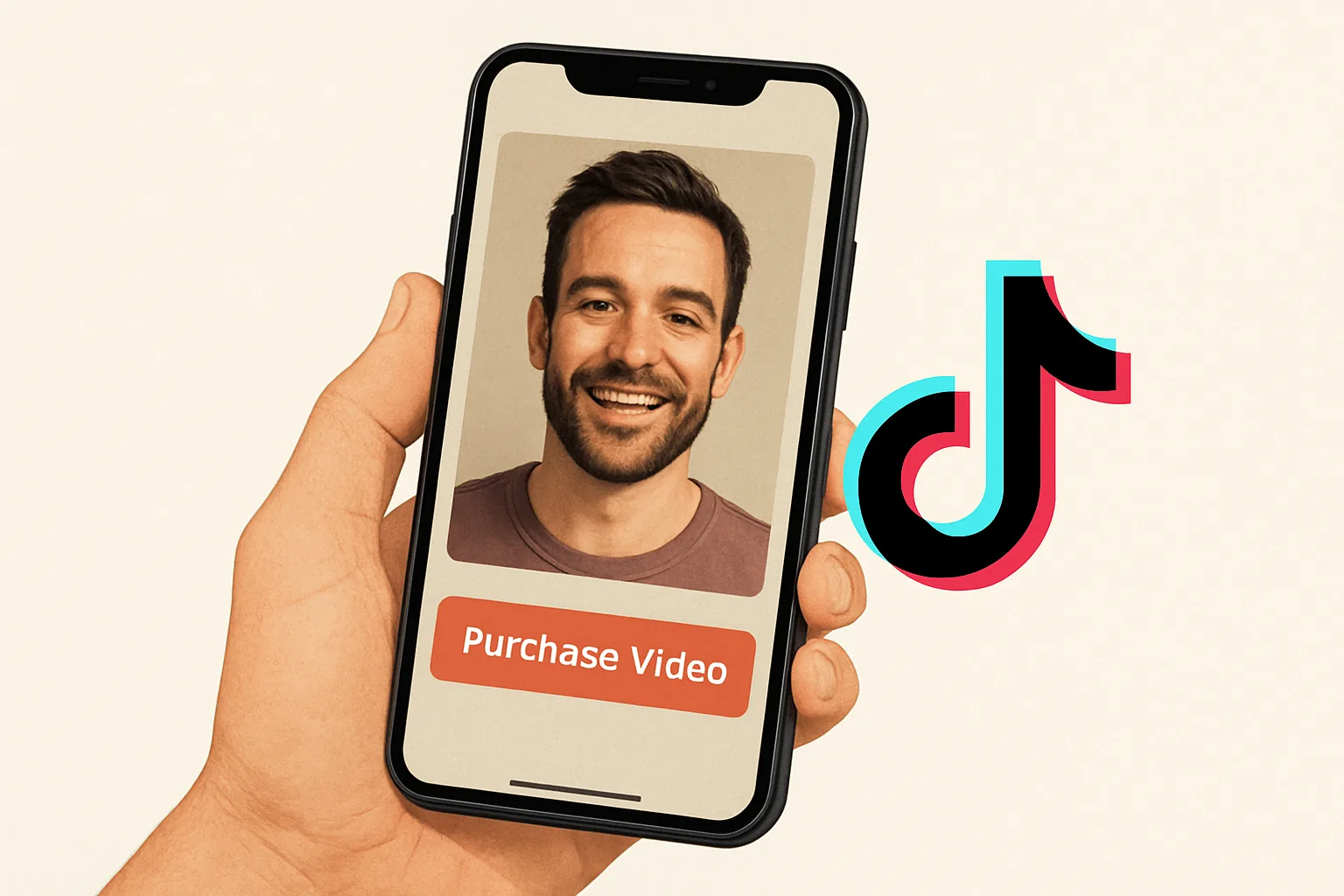
Cameo has partnered with TikTok to let U.S.-based creators sell personalized video messages without pushing fans out of the app. That is the headline, but the more important point is where the transaction now begins: inside the feed, beside the content, at the moment fan attention is highest.
According to the announcement and subsequent coverage, creators can sign up for Cameo through TikTok and add calls to action that let followers request paid videos directly from within the platform. For creators already on Cameo, that means access to TikTok’s audience without asking fans to leave the app first. For TikTok creators who were not already using Cameo, it turns a familiar fan interaction into a native monetization option.
This matters because Cameo does not just need new creators. It needs fewer steps between interest and purchase.
Why the partnership matters now
Cameo’s core product is easy to understand: fans pay for a personalized message from a creator or celebrity. The weakness has never been the pitch. The weakness is friction. A fan sees a creator on TikTok, decides they want a birthday shoutout or joke video, then has to leave TikTok, find the creator elsewhere, and complete the request on another platform. Every extra step cuts conversion.
This integration attacks that exact problem. Instead of trying to rebuild Cameo through branding alone, it plugs the service into a place where creator fandom is already active and habitual. That is a better bet than assuming users will make a separate destination app part of their routine.
It also fits the way creator businesses increasingly work in 2026. The winning tools are usually not the ones that ask audiences to form a new habit from scratch. They are the ones that attach themselves to existing behavior: watching, scrolling, reacting, following.
Cameo is chasing distribution, not just relevance
The source material frames this partnership as part of Cameo’s attempt to recover popularity, and that context matters. Cameo was once valued at $1 billion during the pandemic boom, when remote fan interactions felt novel and unusually urgent. But that period did not last. Coverage notes that the company’s valuation fell by more than 90% in 2024, and that it also faced financial strain, including a $600,000 Federal Trade Commission fine.
That history changes how this TikTok deal should be read. It is not a flashy expansion from a position of strength. It looks more like a distribution reset. Cameo is trying to place its product where demand can be captured more efficiently, instead of relying on standalone brand pull.
That distinction is useful for anyone watching the creator economy. Plenty of consumer platforms look durable when they own a quirky or culturally visible product. They become fragile when they discover the real moat was distribution timing, not long-term habit. Cameo now appears to be responding to that problem directly.
Why TikTok is a sensible partner
TikTok is an obvious fit because the product already behaves like TikTok content. Cameo CEO Steven Galanis said Cameo videos “regularly go viral on TikTok,” and said TikTok talent had its strongest year on Cameo in 2025. Even without overreading those claims, the logic is straightforward: short personalized videos are highly shareable, legible in seconds, and easy for fans to imagine buying for a friend.
The source also notes that TikTok creators are among Cameo’s fastest-growing segments, with names such as Ash Trevino, Alex Dougherty, and Smooth Papi topping Cameo’s leaderboard. That suggests Cameo no longer depends mainly on the older celebrity model that originally made it famous. The newer growth engine seems to be internet-native creators whose fan relationships were built on social platforms first.
In that sense, the partnership is less about importing Cameo into TikTok than admitting TikTok already became one of Cameo’s most important talent pipelines.
A concrete example of what changes
Consider a mid-tier TikTok creator with a loyal audience, not a household-name celebrity. Before this integration, a fan might watch a creator’s videos for months, hear that they offer Cameos, then abandon the purchase because it required searching for a separate profile off-platform.
With the new setup, the same creator can add an in-app prompt while fans are already engaged. A parent looking for a personalized birthday message, or a friend looking for a joke roast video, can move from interest to request inside the same environment. That does not guarantee a sale, but it removes the most obvious drop-off point.
For creators, that can make personalized videos feel less like a side hustle hidden behind a link-in-bio and more like a normal extension of the content business.
What this says about creator monetization
The deeper story is not just about Cameo. It is about how platforms and creator tools are converging around direct fan spend.
For years, the creator economy leaned heavily on advertising, sponsorships, and platform revenue shares. Those remain important, but they are unpredictable for many smaller creators and often depend on algorithmic reach. Personalized products like Cameo offer something different: payment tied to audience intensity rather than audience size alone.
That is especially attractive for creators with devoted niche followings. A creator does not need mass-market scale if a smaller group of fans is willing to pay for direct, individualized access. TikTok already captures attention; Cameo gives some creators a way to capture transaction value from that attention without building a separate storefront.
The source briefly points to a wider pattern here, noting that media and entertainment companies are increasingly using influencer partnerships to strengthen their offers. That comparison is useful, but this deal is narrower and more operational. It is not just influencer marketing. It is commerce infrastructure built around fan relationships.
What to watch next
The first question is adoption. The feature can make sense on paper and still stall if creators do not see enough demand or if fans treat personalized videos as novelty purchases rather than repeat behavior.
The second is whether TikTok becomes more than a traffic source. If enough creators use the feature, TikTok could become a meaningful point-of-sale layer for services that used to live elsewhere. That would matter beyond Cameo, because it would show how much creator monetization now depends on staying embedded in platform-native flows.
The third is whether Cameo can turn this into durable business improvement rather than a short burst of attention. The company has already tried other ways to regain momentum, including the launch of its birthday planning app Candl last year. This TikTok partnership feels more directly connected to Cameo’s original product, which gives it a clearer strategic fit. But better placement does not automatically solve every problem a company accumulated during a downturn.
Still, this is a more grounded move than a reinvention for its own sake. Cameo is betting that personalized video is still valuable if it appears at the right moment, in the right place, with less friction. For a company trying to recover after a steep drop, that is a practical thesis.
If it works, the lesson will not be that Cameo invented a new format. It will be that creator products often become stronger when they stop acting like destinations and start behaving like native features inside the platforms where fans already are.