
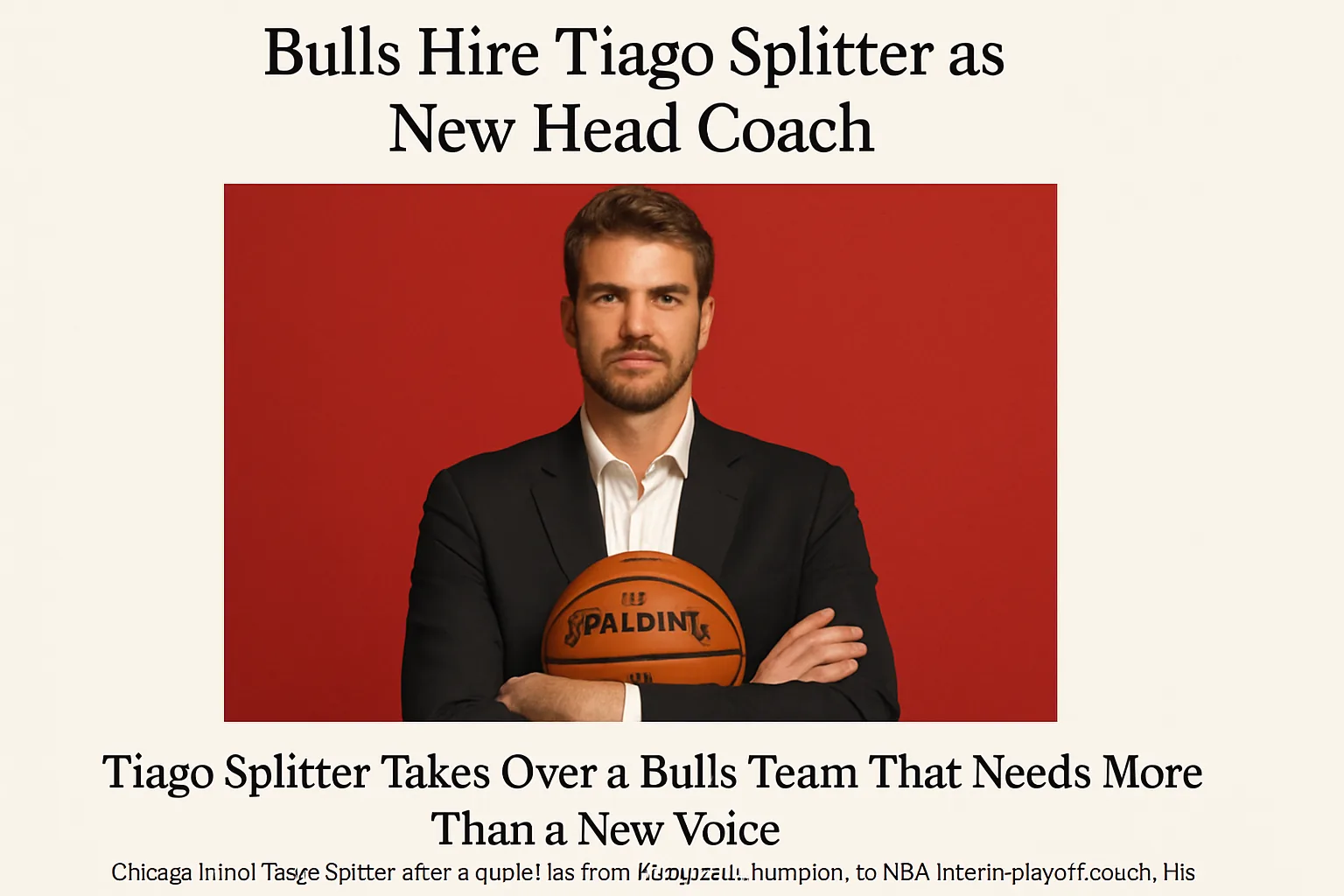
The Chicago Bulls have officially named Tiago Splitter as their new head coach, moving quickly to install a new sideline leader as the franchise reshapes its basketball operation ahead of the NBA Draft.
Chicago did not disclose the terms of Splitter’s contract. The team said he stood out during the search because of his basketball intellect and his ability to connect with and develop players. That wording matters, because the Bulls are not simply replacing Billy Donovan with another experienced NBA bench figure. They are betting on a coach whose recent résumé is built around fast adaptation, player growth, and credibility across several basketball environments.
Why Splitter’s Rise Is Unusual
Splitter, 41, arrives after serving as interim head coach of the Portland Trail Blazers last season. Under him, Portland finished 42-40 and reached the playoffs, where it lost to San Antonio in five games. It was the Trail Blazers’ first winning season and first playoff appearance since 2020-21.
That result gives Chicago a cleaner selling point than most coaching hires can offer: Splitter just helped stabilize a team well enough to make the postseason. Interim coaches often inherit difficult situations and are judged more on damage control than long-term design. Splitter’s Portland stint was different because the team improved enough to make its season matter.
His path before Portland also makes the hire more interesting. In 2024-25, Splitter coached Paris Basketball and led the club to French League and Basketball Cup championships while also taking it into the EuroLeague Playoffs. Before that, he spent the 2023-24 season as an assistant with the Houston Rockets and worked for the Brooklyn Nets from 2018 to 2023, first as a pro scout and then as an assistant coach.
That mix is not a standard NBA coaching ladder. Splitter has scouted, assisted, coached in Europe, won in France, handled EuroLeague competition, and then guided an NBA team into the playoffs. For a Bulls franchise trying to redefine itself, that variety is part of the appeal.
The Player-Development Signal
The Bulls’ public explanation for the hire points directly at development. That is not a throwaway phrase for a team entering a front-office overhaul and approaching the draft. It suggests Chicago wants a coach who can help turn roster decisions into actual player improvement, not just manage rotations and press conferences.
Splitter’s playing background gives him another layer of credibility. A 6-foot-11 center from Brazil, he was selected by the San Antonio Spurs in the first round of the 2007 NBA Draft and played seven NBA seasons with San Antonio, Atlanta, and Philadelphia. He was part of the Spurs team that won the 2014 NBA championship.
That does not automatically make someone a good coach. Plenty of former players struggle on the bench. But Splitter’s post-playing path shows he did not jump straight from name recognition into a top job. He moved through scouting, assistant roles, European head coaching, and interim NBA leadership before landing in Chicago.
A practical example: if the Bulls draft a young frontcourt player, Splitter’s value will not be measured only by whether that player gets minutes in November. The bigger question is whether the staff can define a role, build habits, simplify reads, and keep the player useful even through mistakes. That is the difference between “developing youth” as a slogan and developing players as a daily operating system.
Why This Matters for Chicago
The Bulls have spent recent years in a difficult middle ground: recognizable talent, periodic competitiveness, but not enough progress to suggest a clear climb toward contention. A coaching change alone does not fix that. It can, however, reveal what the organization thinks the next phase requires.
Hiring Splitter points toward a coach expected to grow with a changing roster rather than merely squeeze a finished group. His recent Portland record gives him credibility with players who want to win now. His Paris experience gives him proof that he can run his own program. His scouting and assistant background suggests comfort with the less glamorous parts of team building.
The timing is also important. With the NBA Draft approaching, the Bulls are choosing a coach before some of the roster’s next decisions are made. That gives Splitter a chance to be aligned with the front office early, especially if Chicago is prioritizing younger players or a different roster identity.
The risk is that the Bulls are still hiring a relatively new NBA head coach. A 42-40 interim season is encouraging, but it is not a long track record. Success in Chicago will depend on whether Splitter can do more than earn buy-in. He will need to establish offensive and defensive standards, manage veterans, develop younger players, and work inside a front office that is itself changing.
What To Watch Next
The first clues will come before opening night. Chicago’s draft decisions, offseason roster moves, and assistant-coach hires will say a lot about how much authority and alignment Splitter actually has.
- Draft fit: Does Chicago select players who match a developmental timeline, or does it keep prioritizing immediate floor-raising help?
- Staff construction: The assistants around Splitter will matter, especially if the Bulls want strong player-development infrastructure.
- Veteran roles: How Splitter balances established players with younger prospects will shape the season’s tone early.
- Identity: Portland’s playoff berth gives him credibility, but Chicago will need its own style rather than a borrowed success story.
For Bulls fans, the hire should not be judged only as a coaching transaction. It is a signal about what the franchise thinks it needs next: teaching, connection, and a coach comfortable moving between cultures and basketball systems.
Splitter’s résumé is promising because it is varied and recent. The harder part begins now. Chicago needs that experience to become a structure players can feel every day, from draft night through the grind of an 82-game season.