
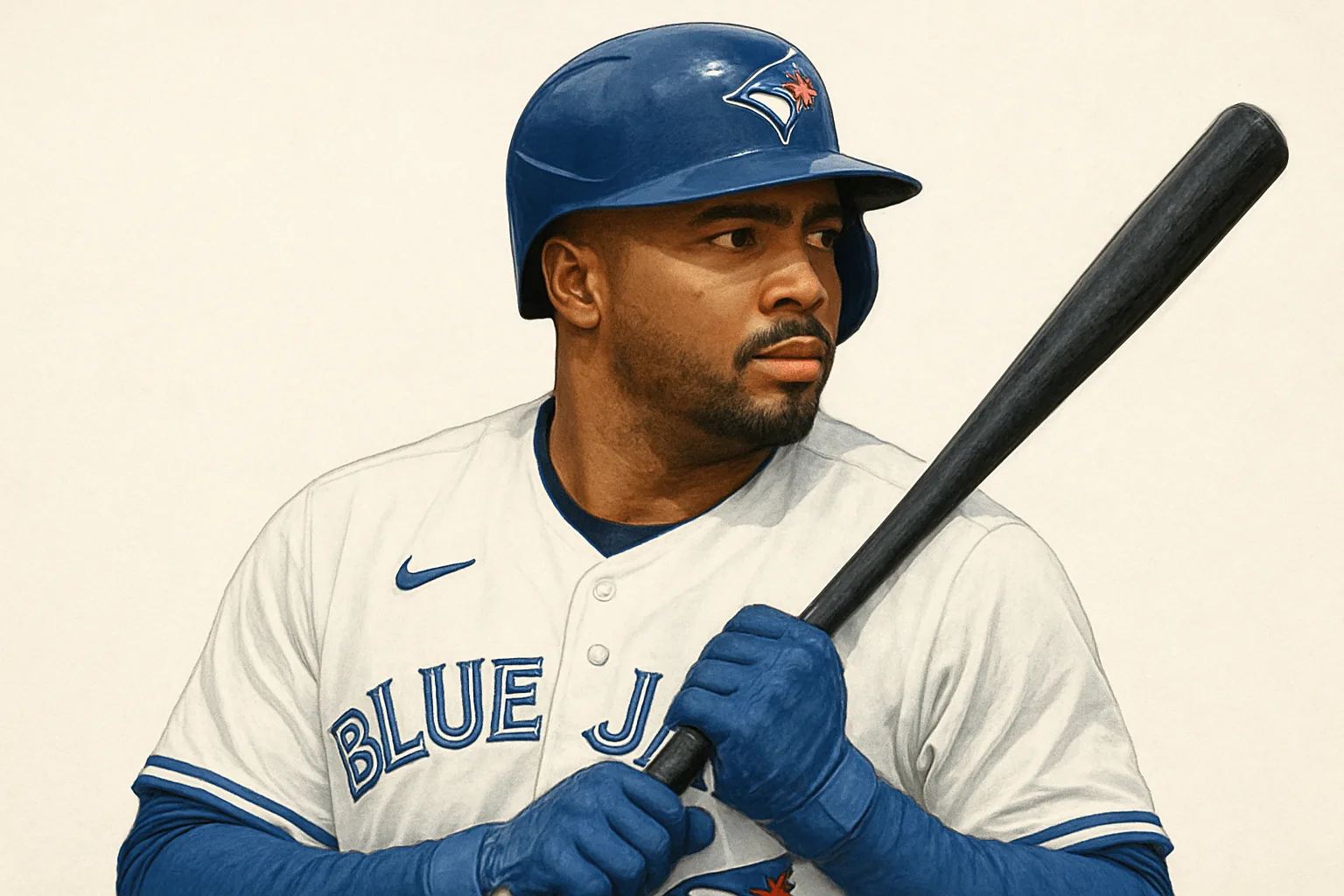
The Blue Jays placed George Springer on the 10-day injured list on April 12 after CT scans confirmed a fracture in his left big toe, and the timing matters almost as much as the injury itself. Toronto is not just losing a recognizable veteran. It is losing its leadoff hitter, one of its emotional anchors, and one of the few players on the roster whose role touches the whole shape of the lineup.
In Springer’s place, the club selected Eloy Jiménez to the major league roster, giving him an opening after what the source describes as a strong Spring Training. That is the transaction. The harder part is what comes next, because there is no simple one-for-one replacement here.
Why this absence matters differently
Teams can sometimes absorb an injury by swapping in a player with a similar job description. That is not the case with Springer. The source is explicit that there is “no replacing Springer,” and that feels accurate not because of reputation alone, but because of function. He is the leadoff hitter. He sets the first tone of the game. He is also described as one of Toronto’s most important players on and off the field, which means his value is spread across lineup construction, game rhythm, and clubhouse presence.
That makes this more than a depth test. It becomes a structural test. Toronto now has to decide not only who takes Springer’s roster spot, but who absorbs his plate appearances, who helps stabilize the top of the order, and how aggressively the club wants to reshuffle its DH and outfield mix while several other injured players remain unavailable.
Manager John Schneider’s comments also explain why Toronto acted now instead of waiting for Springer to push through it. Springer has a history of playing through pain, and Schneider openly acknowledged that. But the club’s concern is that a toe injury could change how Springer moves and end up compromising something else in his lower body. For a player who, in Schneider’s words, has “one speed that he plays at,” that risk apparently outweighed the temptation to squeeze out a few more April games.
That is the practical logic of the move: the Blue Jays are trying to prevent a manageable injury from becoming a chain reaction.
The injury list is starting to shape the offense
What makes the Springer news more significant is the company it keeps. The source notes that Alejandro Kirk is already on the injured list with a left thumb fracture, Addison Barger is dealing with a left ankle sprain, and Anthony Santander is out following left shoulder surgery. It also mentions that Toronto already has a full major league rotation on the IL.
Even if some of those situations differ in severity or expected absence, the effect is easy to understand: this is no longer a single missing piece. The Blue Jays are operating with fewer lineup options, fewer clean matchup answers, and less margin for a slow start.
That is why the recall of Jiménez matters beyond novelty. In a healthier version of the roster, a strong spring from a fringe or complementary bat is helpful. In the current version, it becomes necessary. Toronto now needs credible major league at-bats from places it probably hoped to treat more flexibly.
Eloy Jiménez is not replacing Springer. He is changing the calculation.
It is tempting to frame Jiménez’s call-up as the answer to Springer’s absence, but the source points in a different direction. Jiménez gets an opportunity because he earned attention in camp and because Toronto needs another bat. That does not mean he can reproduce Springer’s role.
The more realistic reading is that Jiménez gives the Blue Jays a new variable. He can help cover plate appearances. He can influence how often Toronto uses the designated hitter slot versus the outfield. He can give Schneider another way to patch together the order while the club waits to learn whether Springer’s absence really will be brief.
That distinction matters. Replacements are rare. Workarounds are common. Toronto is looking for a workable arrangement, not a duplicate.
A simple example makes the problem clearer. If Springer is unavailable at the top of the lineup, the Blue Jays do not just lose his individual production. They also lose a player around whom the first inning can be organized. Calling up Jiménez may add a bat somewhere in the order, but it still leaves Toronto deciding who now starts games, who shifts into a more demanding offensive spot, and whether the club is sacrificing outfield flexibility to keep enough offense in the lineup.
That is the kind of adjustment that can ripple through an entire week, even if the injured-list stay is short.
The cautious timeline tells its own story
There is at least one encouraging detail in the source: Schneider said a minimum 10-day stint would be the best-case scenario, and the Blue Jays expect to know more by Wednesday or Thursday. The team is optimistic Springer will not be out long. That matters, because a short absence changes the tone of this story. A brief reset is an inconvenience. A lingering foot issue for an older everyday player would be something else entirely.
Still, even the optimistic version carries some discomfort. Schneider said the injury is probably not going to feel great for a couple of weeks, even if Springer improves in seven to 10 days. That is a useful reminder that “minimum IL stint” does not always mean “fully normal player immediately after activation.” Toronto may get Springer back relatively soon, but the real question is whether it gets his normal movement and game speed back with him.
For now, the club is betting that early caution is the better trade. Given Springer’s history of trying to play through pain, that is probably the responsible call. April is exactly when teams are supposed to protect themselves from their own veterans’ willingness to overextend.
What to watch next
The next few days are about more than medical updates. They will show how fragile or resilient this version of the Blue Jays’ offense really is.
- Watch the batting-order solution. Springer’s absence creates a top-of-the-order problem before it creates anything else.
- Watch how Jiménez is used. The call-up matters most if it gives Toronto a credible bat while preserving some flexibility elsewhere.
- Watch whether “short-term” stays short-term. The Blue Jays are already managing multiple position-player injuries, and small delays can compound when a lineup is thin.
The larger issue is not that Toronto lost one player in mid-April. Teams survive short injuries all the time. The issue is that the Blue Jays are already spending energy on roster survival when they would rather be figuring out what kind of team they are.
Springer’s injury may yet prove minor in calendar terms. If he returns after the minimum, this can quickly become a footnote in the season. But for the moment, it sharpens a problem that was already visible: Toronto does not have much room left for disruption, and every new absence now changes the way the lineup has to function.
That is why this move deserves more attention than a routine injured-list update. It is an early test of whether the Blue Jays can keep the offense coherent while waiting for healthier days.