
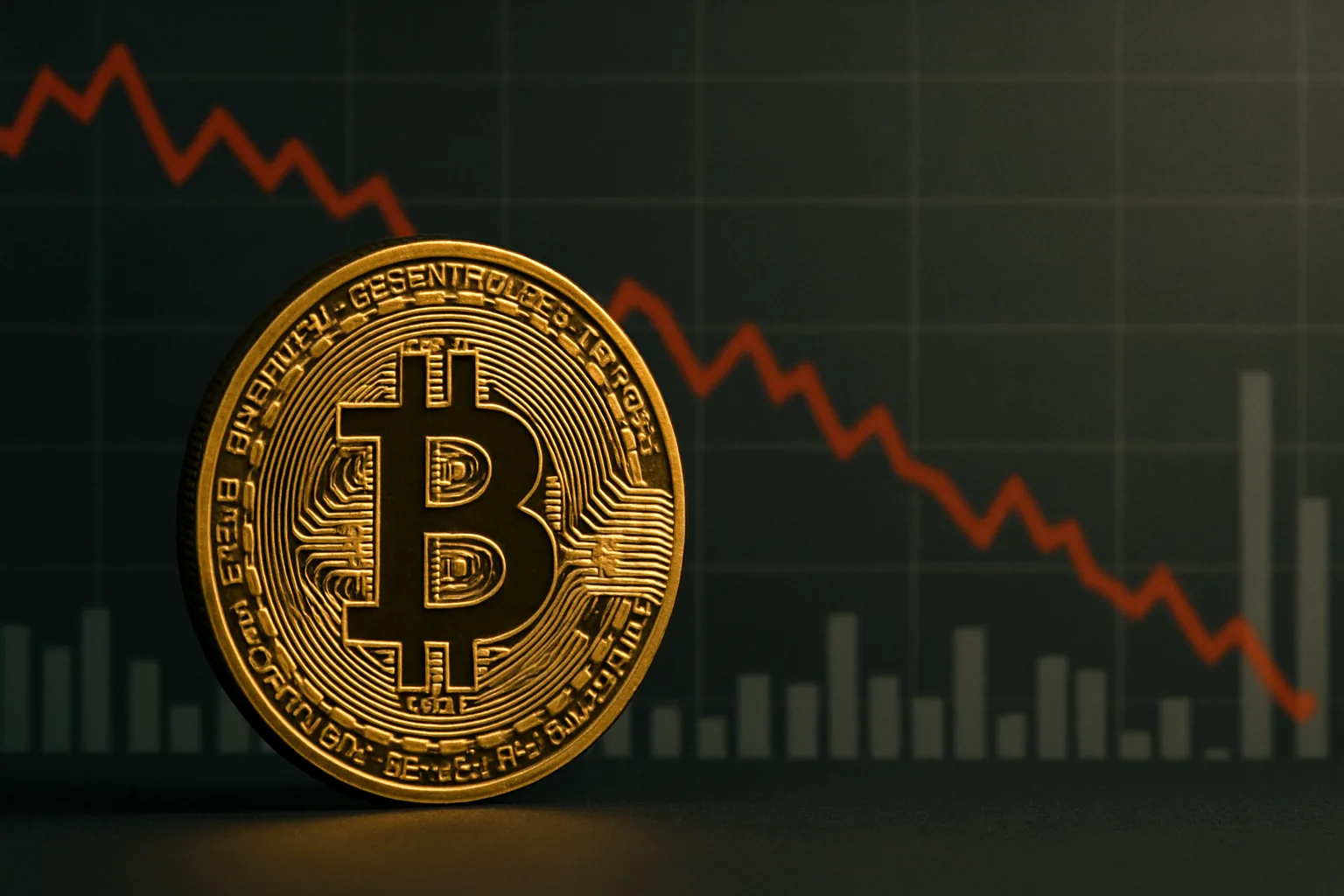
Bitcoin's slide below $68,000 as the U.S. 10-year Treasury yield pushed near a yearly high is a familiar kind of reminder for crypto traders. No matter how often the asset is described as independent, decentralized, or structurally distinct from traditional finance, it still reacts sharply when the macro backdrop changes. Rising Treasury yields do not just alter bond prices. They change the relative appeal of risk across the market.
That matters because the move is easy to oversimplify. A drop in bitcoin on a day of higher yields does not mean every investor suddenly abandoned the crypto thesis. It does mean the market was forced to reprice how attractive speculative exposure looks when safer assets begin offering more compelling returns. In that environment, investors often demand a better reason to hold volatility.
Why the 10-year yield matters so much
The U.S. 10-year Treasury yield is one of the most important reference points in global markets because it affects discount rates, borrowing costs, and the opportunity cost of holding assets that produce no cash flow. Bitcoin does not pay a coupon or dividend. Its appeal depends heavily on liquidity, sentiment, scarcity narratives, and expectations for future appreciation. When Treasury yields rise, the hurdle rate for those expectations rises too.
That does not automatically make bitcoin weak. It simply means the asset still competes for capital. If investors can earn more in government bonds with far less volatility, some speculative positions get trimmed. The effect is usually strongest when yields are rising because inflation, policy expectations, or growth assumptions are shifting in ways that tighten financial conditions more broadly.
Why crypto still trades like a risk asset
Supporters often argue that bitcoin should behave as a long-term hedge against monetary disorder, and over long horizons some investors still frame it that way. But in day-to-day trading, bitcoin often behaves more like a macro-sensitive risk asset than a defensive refuge. It responds to liquidity conditions, dollar strength, rate expectations, and portfolio de-risking flows much like other high-volatility assets do.
That is why the sub-$68,000 move is less surprising than dramatic. It fits a known pattern. When bond yields approach levels that pull attention back toward fixed income, crypto can struggle unless it has a strong idiosyncratic catalyst to offset the macro headwind. Without that catalyst, the default market logic tends to reassert itself quickly.
A useful comparison is this: investors may admire a high-performance vehicle, but if the road turns icy they still drive more carefully. Bitcoin can retain long-term appeal while still facing short-term pressure the moment macro conditions become less forgiving.
What traders are likely watching next
The next question is whether the yield move continues or stabilizes. If Treasury yields keep climbing, pressure on crypto could broaden as investors reassess leverage, rotate into safer income, or reduce positions that depend on easy liquidity. If yields ease back, bitcoin may recover quickly because crypto sentiment can reverse fast once the immediate macro stress fades.
Market participants will also watch whether this decline remains a straightforward rate reaction or becomes a larger sentiment event. A modest pullback tied to yields is one thing. A deeper slide that triggers forced selling, broader altcoin weakness, or a shift in spot demand would suggest the market is more fragile than headline price levels imply.
What the move really tells us
The most useful takeaway is not that bitcoin failed some test of independence. It is that crypto remains embedded in the same capital-allocation system as everything else. Even a scarce digital asset with a distinctive story must compete against yields, liquidity conditions, and investor psychology. When the return available on safer assets rises, that competition gets tougher.
That reality does not end the bullish case for bitcoin, but it does make the asset easier to read. Traders do not need to invent a special explanation every time macro pressure shows up. Sometimes the answer is simply that higher yields tighten the market's appetite for risk. The move below $68,000 is another example of that old rule still working.