
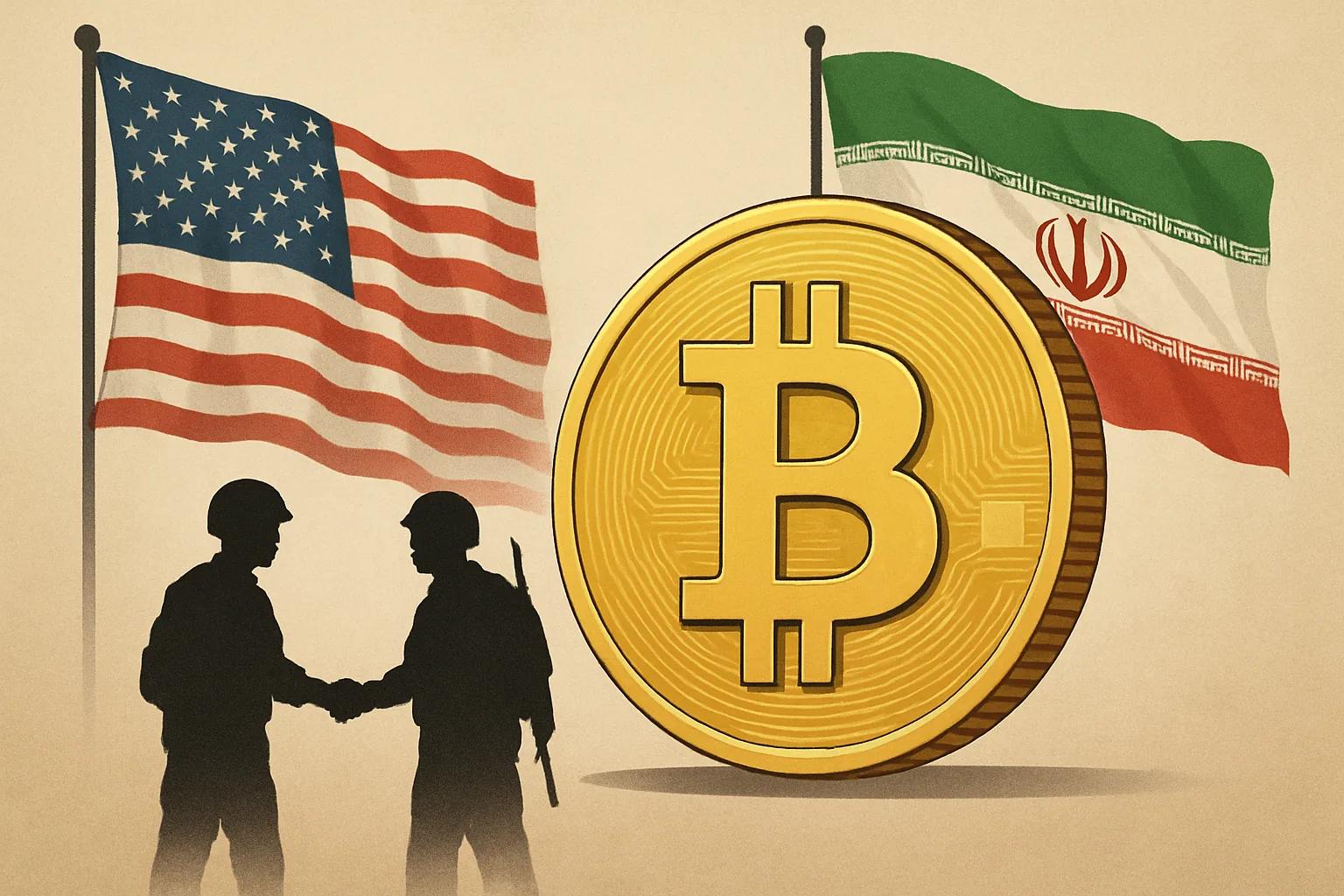
Bitcoin and Ethereum climbed sharply on April 8 after President Donald Trump said the US and Iran had agreed to a two-week ceasefire to continue talks. Bitcoin briefly moved above $72,000, up roughly 5% over 24 hours according to the source material, while Ethereum rose about 6% to $2,257.
The immediate trigger was simple: a pause in war risk. But the importance of the move sits one layer deeper. This was a reminder that crypto is still trading like a highly sensitive macro asset when global stress suddenly rises or fades.
Why prices moved so fast
The source ties the rally to easing geopolitical tension, softer oil prices, and short covering. That combination matters.
When conflict in the Middle East intensified, markets had to price in the possibility of disrupted energy flows, especially around the Strait of Hormuz. The source notes that Trump had set Iran a deadline to reopen the waterway, and that WTI crude had surged to $115.8 a barrel after the US hit Kharg Island, the hub for roughly 90% of Iran’s oil exports. Crypto traded lower during that spike.
That relationship is not hard to understand. Higher oil prices feed inflation concerns. If inflation risk rises, central banks have less room to cut rates. And when rate cuts get pushed out, liquidity-sensitive assets usually lose some support. Bitcoin has often benefited when markets expect easier money. It tends to struggle when investors start bracing for tighter conditions for longer.
So when the ceasefire headline landed, traders were not just reacting to a diplomatic development. They were repricing a chain of macro consequences: lower odds of an immediate energy shock, lower inflation pressure than feared, and slightly better odds for a friendlier liquidity backdrop.
This was also a positioning squeeze
The source description says the move was amplified by short covering. That suggests some traders had leaned too hard into the idea that escalation would keep dragging crypto lower. Once the headline broke in the other direction, those bearish positions likely had to be closed quickly, which can accelerate a move beyond what spot demand alone would produce.
That distinction matters because it affects how durable the rally may be. A market driven by fresh long-term conviction behaves differently from one driven by traders rushing to exit shorts. Short covering can create a strong burst higher, but it does not automatically mean a new trend is firmly in place.
In other words, Bitcoin crossing $72,000 tells readers that the market was caught leaning too defensive. It does not, by itself, settle whether the next leg is a clean breakout or another volatility spike inside a headline-driven range.
A concrete way to think about it
Imagine a trader or small treasury manager who had reduced crypto exposure when oil surged and war rhetoric escalated. The reasoning would have been straightforward: if crude keeps climbing and conflict widens, inflation expectations could rise, central banks could stay restrictive, and risk assets could come under pressure.
Now flip the headline. A temporary ceasefire appears, oil pressure eases, and Bitcoin quickly reclaims lost ground. That same market participant now has to decide whether to buy back exposure before prices run further, or wait and risk missing the move. Multiply that decision across leveraged traders, funds, and market makers, and a sharp rebound starts to make sense.
The example is useful because it shows this was not only a crypto story. It was a cross-market reaction filtered through crypto’s usual sensitivity to liquidity and positioning.
Why this matters beyond one day’s rally
For much of crypto’s history, the strongest narratives have come from inside the sector itself: protocol upgrades, exchange failures, ETF decisions, regulation, or adoption news. This episode points in a different direction. Crypto is being pushed around by the same external variables that move other risk assets, but often with greater speed.
The source says Bitcoin has held up better than equities overall during the conflict, while still suffering when oil spikes. That is an important nuance. It suggests Bitcoin is not moving in lockstep with stocks, yet it is still exposed to the same macro pressures. The asset can show relative strength and still remain highly vulnerable to the inflation and rates channel.
That makes simple labels less useful. Calling Bitcoin a pure safe haven misses the downside during oil-driven stress. Calling it just another risk trade misses the periods when it outperforms equities. Right now, it looks more like an asset that can absorb some turbulence better than stocks until the macro shock starts threatening liquidity conditions directly.
What traders are watching next
The source description says traders are eyeing resistance around $74,000 to $75,000. That gives the rally a near-term test.
If Bitcoin pushes through that zone and holds it, traders may argue that the ceasefire headline did more than spark a reflex bounce. It may have reset sentiment after a stress event and reopened the path for broader upside.
If it stalls there, the interpretation changes. That would suggest the market got relief from reduced war risk but still lacks conviction, especially with the ceasefire set to last only two weeks while negotiations continue.
The deadline matters because this story is not resolved. A temporary pause does not remove the risk of renewed escalation. It merely changes the market from pricing immediate deterioration to pricing uncertainty over what comes after the two-week window.
What to watch over the next two weeks
- Oil prices: If crude remains off its highs, crypto gets some breathing room through the inflation and rates channel described in the source.
- Bitcoin at $74,000 to $75,000: That range is the first visible test of whether the rally has real follow-through.
- Ceasefire headlines: Crypto is clearly reacting to every turn in the US-Iran story, so diplomatic progress or breakdowns can move the market quickly.
- The tone of risk markets: If traders shift back into defense, crypto may give up gains even without a crypto-specific problem.
The cleanest takeaway is that this rally was not just a vote for Bitcoin or Ethereum. It was a vote against immediate escalation, against oil at panic levels, and against the most bearish short-term positioning.
That can still matter a lot. It tells readers where the market’s pressure points are. For now, crypto is acting less like a sealed-off alternative system and more like a fast-reacting instrument for macro sentiment. If the ceasefire holds and the energy shock continues to fade, prices may have room to extend. If those conditions reverse, this rebound could look more like a sharp relief rally than the start of a durable breakout.