
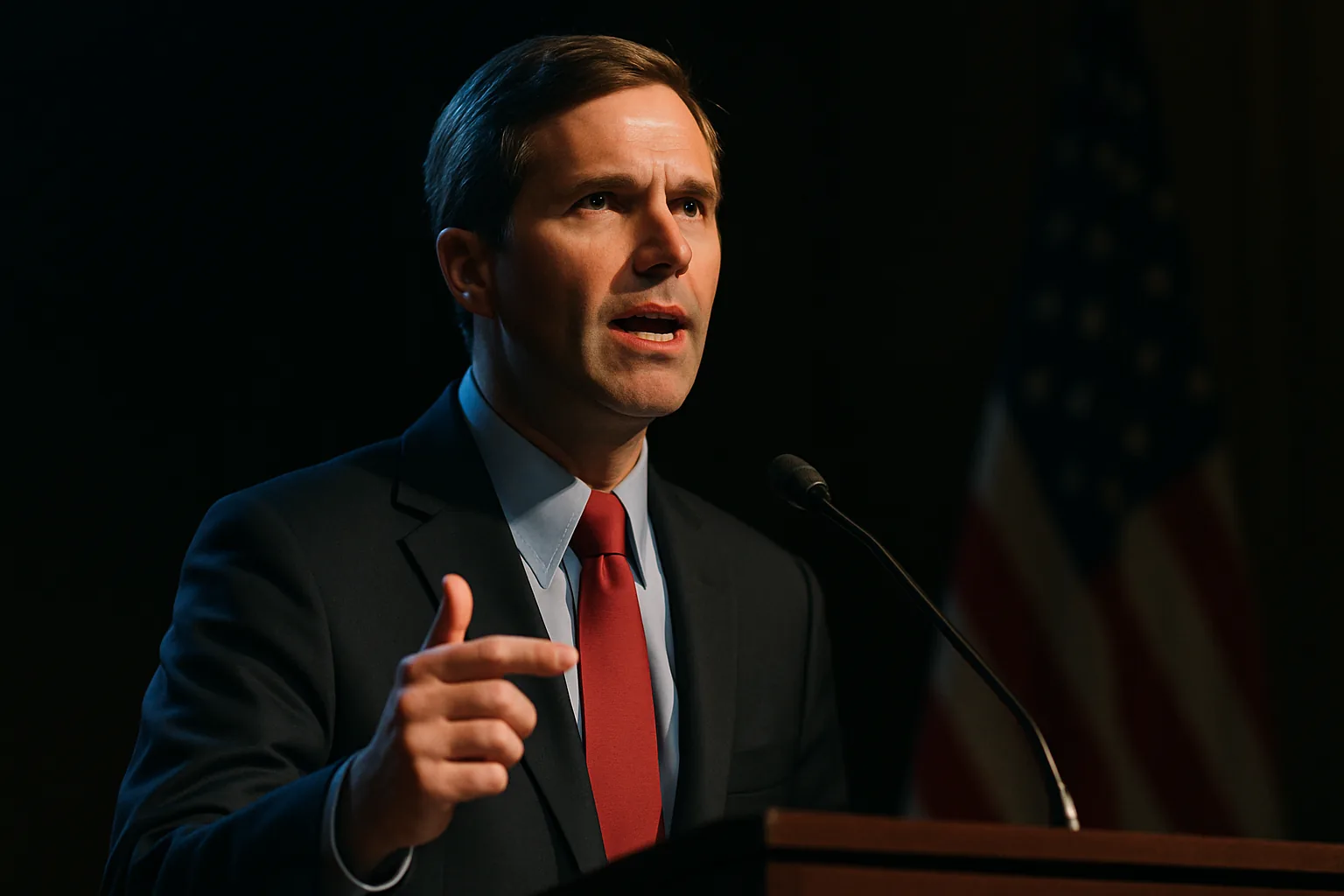
Political confrontations years before a presidential primary matter because campaigns now begin as narrative construction well before they begin as ballot contests. Potential candidates try to define one another early, not because the election is imminent, but because attention is already scarce and reputations are easier to shape before voters start watching closely. That is what gives an exchange between Andy Beshear and J.D. Vance broader meaning than a routine partisan skirmish.
Beshear's criticism of Vance matters because it signals how Democrats may try to frame the next Republican generation and how Beshear himself may wish to be understood nationally. The exchange is not only about Vance's record. It is about whether Beshear can project himself as a credible voice in a party searching for persuasive styles of opposition ahead of 2028.
Why early conflict is now a form of audition
Potential presidential contenders no longer wait for a campaign launch to start building a national profile. Media fragmentation and social attention reward anyone who can generate a recognizable political shape early. Critiquing a likely rival is one way to do that. It tells donors, activists, and journalists what kind of fighter a politician intends to be.
This is why the clash matters. It is as much an audition of tone and political instinct as it is a disagreement over policy or record.
Why Vance is a useful target
J.D. Vance occupies a role that makes him especially attractive as a foil. He is nationally visible, ideologically identifiable, and tied to broader debates over populism, class appeal, and the future of Republican power. A Democrat confronting him is therefore not only challenging one senator. He is engaging a whole style of politics and hoping that contrast will travel beyond one state or one news cycle.
For Beshear, that has upside. It allows him to present moderation, electability, or governing competence against a figure associated with sharper ideological conflict.
A useful way to frame it is this: early presidential positioning works by turning one opponent into a stand-in for an entire political direction.
Why timing changes the meaning of the clash
Because the election is still distant, the exchange carries less immediate electoral cost and more reputational value. It becomes a test of message discipline, stamina, and how easily a politician's style scales beyond a home-state audience. These are the kinds of moments parties use informally to decide who feels nationally plausible before the formal contest starts.
That does not mean the moment is decisive. It means it is part of the long pre-campaign that increasingly determines which candidacies later look natural rather than improvised.
What to watch next
The important questions are whether Beshear sustains a broader national argument beyond this clash, whether Vance continues attracting cross-party attention as a Republican standard-bearer, and whether either man begins to look like a proxy for the larger ideological contest of 2028. If so, early exchanges like this will matter more in retrospect than they seemed in the moment.
That is why the story matters. It captures how presidential politics now begins in fragments of positioning long before filing deadlines or primary maps come into view.
By the time a campaign is officially underway, many of its central narratives have already been tested in clashes like this one.