
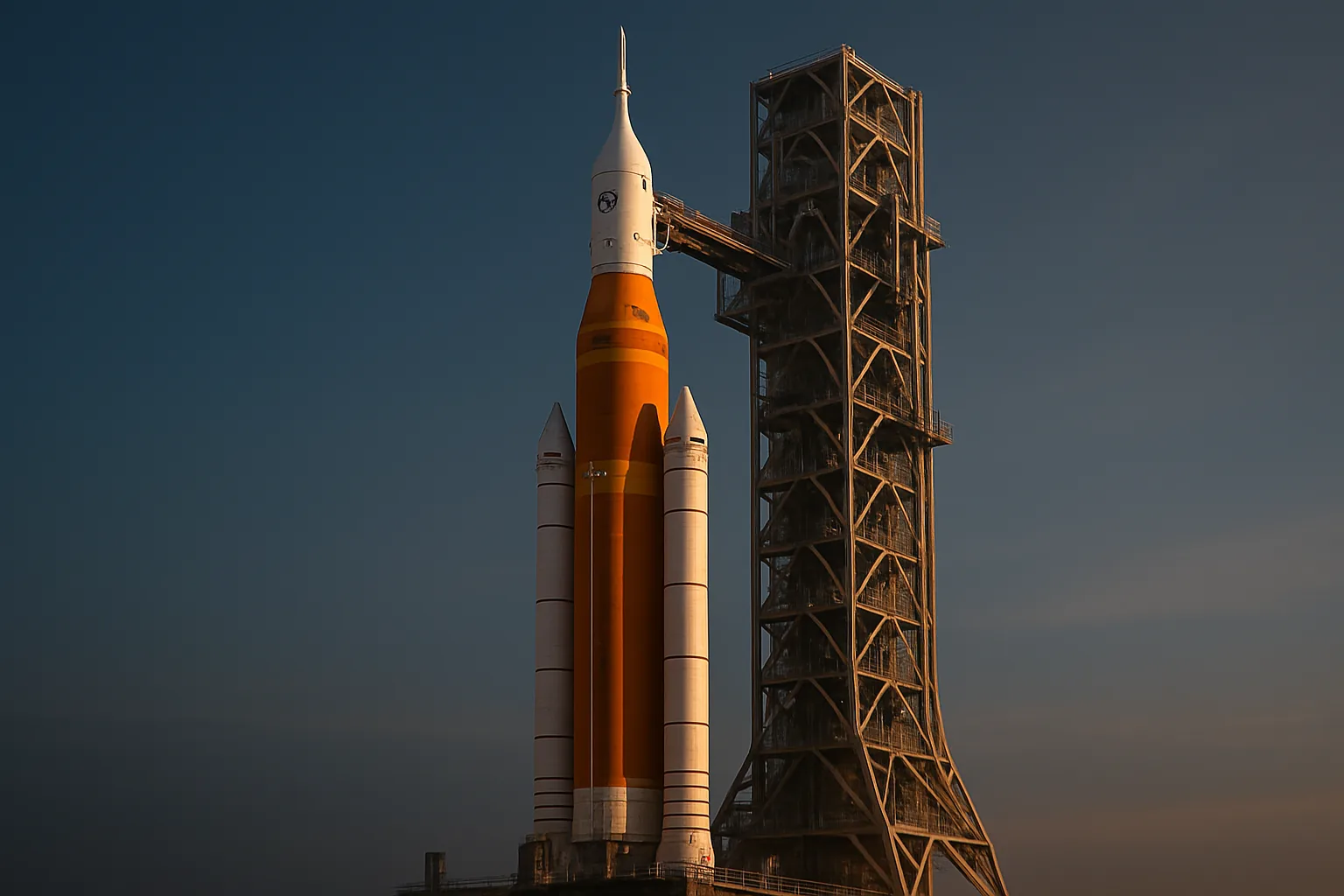
Artemis 2 returning to the launch pad matters because flagship space programs live or die by whether ambition can be converted into credible operational steps. For years, Artemis has carried expectations about American leadership in deep-space exploration, the return of astronauts to the Moon, and the long-term architecture for human missions beyond low Earth orbit. A launch-pad milestone is therefore not merely procedural. It is one of the visible points where the program proves it is still moving from promise toward flight.
That visibility matters because space programs accumulate skepticism whenever timelines slip or technical obstacles dominate the conversation. Hardware back at the pad helps shift the narrative from delay to readiness, even if significant work still remains before launch.
Why pad return is symbolically powerful
The pad is where abstract planning becomes tangible. It is the place where years of engineering, assembly, and testing begin to resemble an actual mission rather than a concept. For the public and for policymakers, that symbolism carries real weight. It makes the program legible in a different way than internal milestones ever can.
This is why the event matters even to people who do not follow every technical detail. The image of a vehicle back at the pad communicates that the mission has crossed another threshold toward reality.
A useful way to frame it is this: major exploration programs need visible evidence of momentum, and the pad is one of the clearest forms that evidence can take.
Why it matters for NASA's institutional credibility
NASA is not only launching a mission. It is asking Congress, international partners, contractors, and the public to continue believing in a long, expensive exploration roadmap. Credibility in that environment depends on demonstrating that complexity is being managed competently. Returning Artemis 2 hardware to launch position suggests that integration work is sufficiently mature to justify the next phase of risk.
That does not eliminate the possibility of further delays or technical issues. It does, however, signal that the program is progressing through real operational gates rather than circling indefinitely in preparation mode.
Why Artemis 2 matters beyond one flight
This mission is consequential because it supports a broader architecture. Lunar missions, commercial partnerships, and future deep-space ambitions all depend in part on whether Artemis can establish a rhythm of credible execution. Each step therefore has implications beyond the immediate crewed flight. Success strengthens the case for persistence. Trouble can magnify doubts about cost, schedule, and strategic coherence.
That is why the story matters. It is about whether NASA can maintain momentum in a program that is expected to carry both symbolic national weight and practical exploration value.
In large-scale space efforts, one mission is often also a referendum on the health of the larger strategy behind it.
What to watch next
The most important questions are whether final integrated checks proceed cleanly, whether schedules hold with reasonable discipline, and whether NASA continues communicating risk and readiness clearly. The mission's significance will grow as hardware milestones are matched by operational confidence.
That is why Artemis 2 returning to the pad matters. It is one of the moments when a long-debated exploration effort becomes visibly harder to dismiss as aspiration alone.
Before a rocket leaves Earth, it first has to restore belief that the program behind it can still deliver. That is part of what the pad represents.