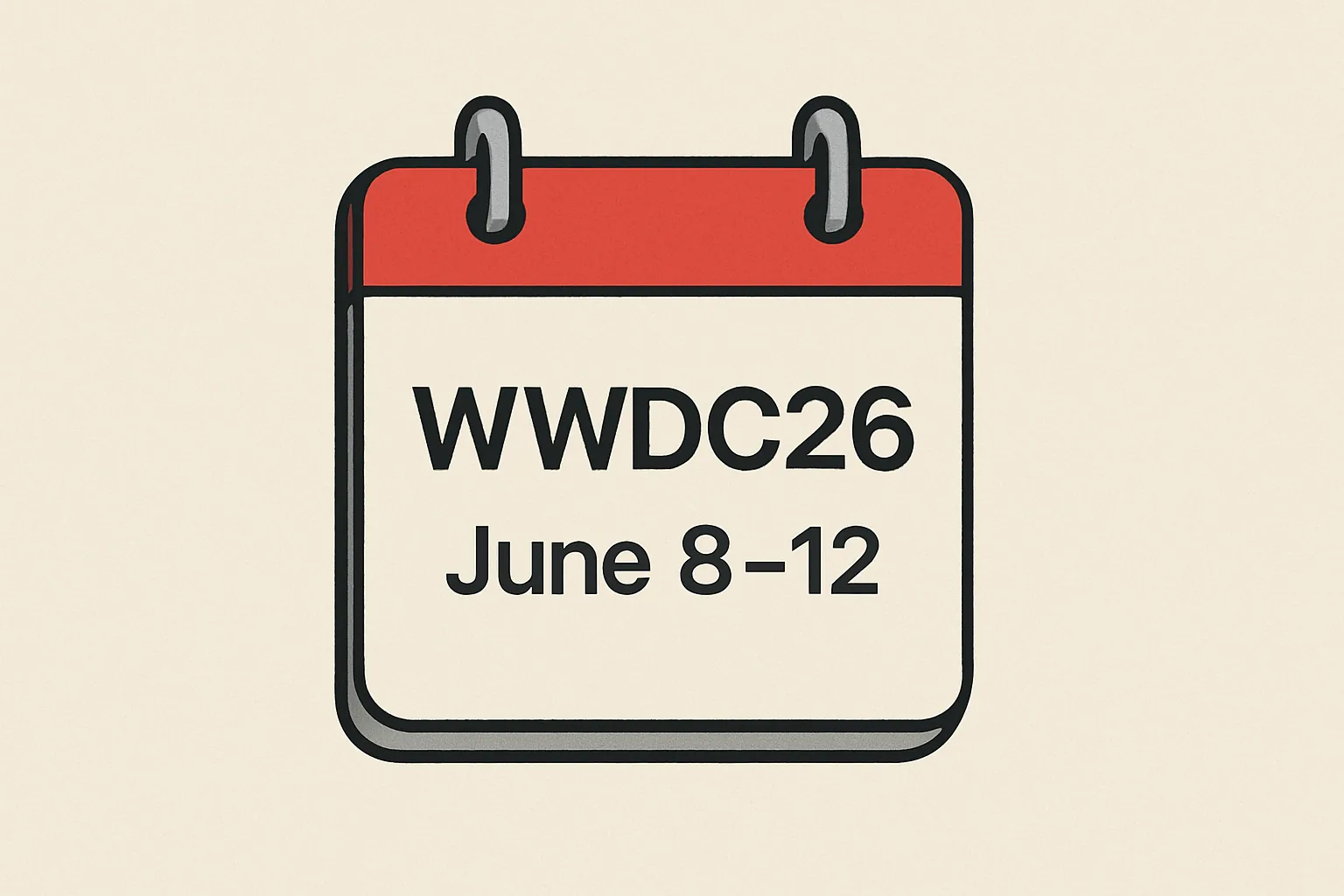
Apple has confirmed that WWDC26 will run from June 8 to June 12, 2026, with the event available online and free through the Apple Developer app, Apple’s developer website, and YouTube. There will also be a limited in-person first-day gathering at Apple Park on Monday, June 8, with attendance by request rather than open public access.
That sounds familiar because it is. But the recurring format is the point. WWDC is no longer best understood as a single keynote that introduces the next wave of Apple software. It is a tightly managed week-long distribution system for product announcements, technical guidance, developer outreach, and ecosystem coordination.
What Apple is actually emphasizing
On its WWDC26 page, Apple leads with the usual promise of the “latest tools, frameworks, and features,” then immediately shifts to how developers will consume them: video sessions from Apple engineers and designers, labs with Apple experts, and community access built around the company’s own channels. That framing matters because it tells developers where the real work happens after the keynote.
The company is not pitching WWDC26 as a spectacle. It is pitching it as an operating week for builders. Developers are being routed into sessions, one-on-one or group learning formats, notifications, profile personalization, and event-specific updates. Apple even highlights developer profiles and account settings as part of the WWDC experience, which is a small but revealing sign of how much the event now depends on personalized distribution.
In other words, Apple is not just announcing software. It is segmenting its audience and delivering the follow-up material in a way that keeps developers inside Apple’s own tools and surfaces.
Why the format matters
For casual viewers, the keynote will still dominate attention. For developers, founders, and product teams, the bigger value usually arrives after that first presentation ends.
WWDC has become the point where Apple resets the platform roadmap for the next year. New APIs, framework changes, UI conventions, tooling updates, platform policies, and technical guidance tend to ripple outward from this week. A flashy keynote feature can draw headlines, but a session video or lab answer can do more to shape what actually ships in apps over the following six months.
This is why Apple’s “all online and free” message still deserves attention. The online-first structure broadens access to the knowledge layer of WWDC even if the in-person kickoff remains scarce. The gate is not completely open, since live access, timing, and attention still matter, but the most important educational material is no longer reserved for people physically in Cupertino.
That has consequences for smaller teams. A two-person app company and a large software business can now watch the same sessions, study the same framework introductions, and react on the same week. Execution still separates them, but access to the core information is much less unequal than it once was.
The quiet business story behind WWDC26
Outside coverage is already pointing to AI and a major software-and-tools push as likely headline themes for the keynote. Apple’s own WWDC26 language is more restrained, but it still supports that general reading. The company is putting unusual weight on tools, frameworks, sessions, and labs rather than presenting the event as a simple consumer product showcase.
That distinction matters because Apple’s developer conference often signals where the company wants third parties to invest effort next. When Apple spends its opening message on platform capabilities and then backs it up with technical sessions, sample workflows, and expert access, it is trying to turn strategy into implementation.
If AI-related features or new development tooling do headline the week, the real question will not be whether Apple can demo them on stage. It will be whether the sessions and labs make those capabilities concrete enough for developers to ship useful products quickly.
A practical example
Take a small subscription fitness app planning a fall release. The keynote might introduce new OS-level features or updated developer tools that sound promising, but the decision to actually rebuild onboarding, add a new assistant workflow, or change notification behavior will likely depend on what the team learns later in the week.
If WWDC26 sessions explain a new framework clearly, show integration patterns, and answer edge-case questions in labs, that team can start scoping work almost immediately. If the announcements are broad but the implementation guidance is thin, the same team may wait for documentation updates, community testing, or later beta stability before committing. That is the gap between keynote excitement and shipping reality, and WWDC exists to close it.
What to watch once the conference starts
The most useful signals from WWDC26 probably will not be the loudest ones. They will be the details that show up across Apple’s follow-up material.
- How much depth Apple gives new tools: strong session coverage usually means Apple wants adoption, not just headlines.
- Whether labs address real implementation friction: developer enthusiasm rises quickly when Apple answers practical questions early.
- How unified the message is across app, web, and YouTube: Apple is clearly treating distribution itself as part of the product.
- Whether the in-person kickoff produces anything extra: if Apple Park attendees get richer access or context, that can shape first impressions before the wider online audience catches up.
There is also a simpler thing to watch: pace. WWDC works best when Apple turns the week into a progression, not a dump of disconnected announcements. A strong conference gives developers a first-day vision, second-day clarity, and end-of-week momentum.
What this means for readers who are not Apple developers
Even if you never write a line of Swift, WWDC still matters because it sets constraints and opportunities for a large share of the app economy. Agencies, SaaS companies, e-commerce operators, marketers, and founders that depend on Apple platforms end up reacting to decisions made here, whether that means redesign work, feature reprioritization, compliance changes, or new customer expectations.
So the confirmed dates are the smallest part of the story. The more important fact is that Apple has again built WWDC as a system for moving its platform forward in public: announcement first, instruction immediately after, ecosystem response next.
That is why June 8 matters. Not because it starts a keynote, but because it starts the week in which Apple tells developers what the next year of building on its platforms is supposed to look like.
Source: Apple WWDC26 page
Official Apple Developer news announcement