
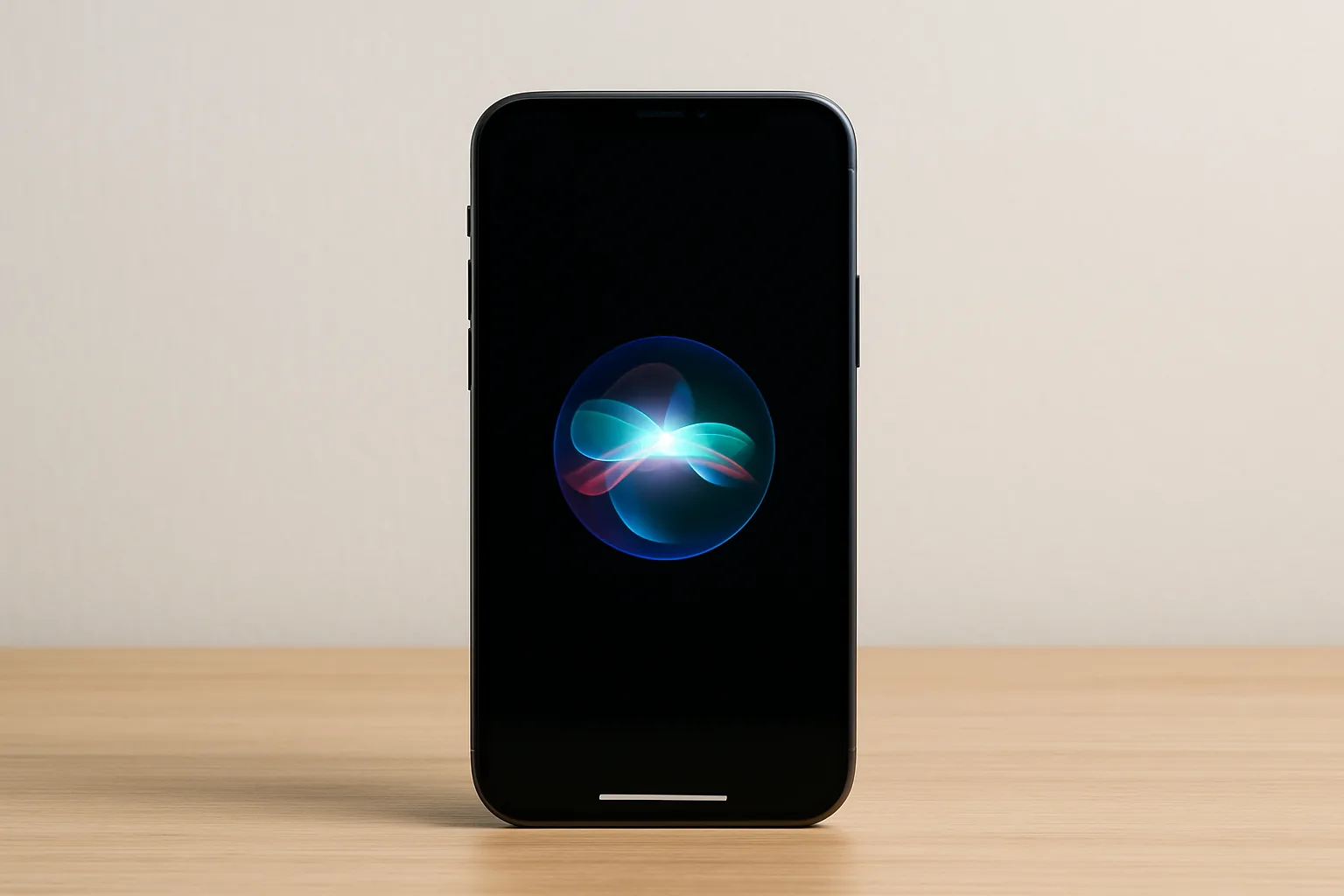
Apple used its June 2026 Worldwide Developers Conference keynote to reintroduce Siri as “Siri AI,” a more conversational assistant promised for operating system updates arriving this fall.
The pitch is not just that Siri will answer questions more naturally. Apple is positioning the overhaul as a shift from single-command voice help to an assistant that can understand context, move across apps, and carry out multi-step tasks. That is the part that matters. Siri’s old weakness was not merely that it sounded less fluent than newer chatbots; it often failed at the handoff between what a user meant and what an app could actually do.
According to the source material, the new Siri AI is tied to a broader Apple Intelligence update, a Google-powered refresh of Apple’s on-device Foundation Models, and deeper integration across Apple’s operating systems. Apple also previewed platform updates including iOS 27 and macOS 27 “Golden Gate,” along with developer tooling improvements around its Foundation Models framework, Xcode, and related APIs.
What Apple Is Promising
Apple framed the new Siri as a “brand new conversational experience” that can operate well beyond one-shot tasks. In scripted demos, executives showed Siri moving between questions, personal context, app data, and actions.
One demo began with a user asking about World Cup schedule information, then asking for recipes inspired by a Brazil vs. Morocco match. The user then asked about a dessert that a friend named Maria had recently mentioned, which Siri found in Messages. From there, Siri assembled the information into a watch party menu and sent it to a group chat with an invite.
Another demo started with a question about where a photo of an arch was taken, then shifted to finding the address of a friend named Jeff who had recently moved. Siri then used those pieces of context to generate Apple Maps directions to the arch with a stop at Jeff’s.
Those examples are carefully staged, but they point to the real product ambition: Siri is being asked to become a coordinator, not a command line. It must remember the thread of a conversation, know which personal data is relevant, choose the right app, and perform actions without forcing the user to manually copy details from one place to another.
Why the Google Piece Matters
The source material describes the update as Google-powered, with Gemini models used behind the scenes as part of a two-tier AI model overhaul. That is notable because Apple has spent years emphasizing privacy, on-device processing, and tight control over its software stack. Using Google’s models suggests a practical compromise: Apple wants the assistant experience to feel competitive quickly, even if that means leaning on outside model capability where its own systems are not enough.
That does not necessarily mean Siri becomes a Google product in Apple clothing. The more important question is where each model runs, what data it can access, and how Apple divides work between on-device models and more capable external systems. For users, the boundary will be mostly invisible unless it affects privacy prompts, latency, reliability, or feature availability.
Apple’s challenge is harder than adding a chatbot window to the iPhone. A chatbot can be useful even when it gives a text answer. Siri AI has to act inside a dense personal computing environment: messages, calendars, photos, maps, mail, reminders, notes, and third-party apps. That raises the cost of mistakes. A wrong restaurant suggestion is annoying; a wrong message sent to a group chat is a product failure users remember.
The Real Test Is App Action, Not Conversation
Conversational polish will get attention first, but deeper app actions are the more meaningful change. If Siri can reliably complete multi-step tasks, it could reduce the need to open several apps for small bits of coordination.
Consider a simple business example. A shop owner could ask Siri to find the supplier email about a delayed shipment, check the calendar for the next staff meeting, draft a short update for the team chat, and add a reminder to follow up tomorrow. None of those steps is exotic on its own. The value comes from chaining them together while respecting context: which supplier, which team chat, what tone, and what should be a draft rather than an automatic send.
That is also where failures become visible. If the assistant cannot identify the right email, cannot tell when to ask for confirmation, or loses context halfway through, users will fall back to tapping through apps manually. The assistant does not need to be magical; it needs to be predictable enough that people trust it with routine work.
Why Developers Are Part of the Story
Apple’s Platforms State of the Union reportedly emphasized expanded developer tooling, including enhancements to the Foundation Models framework and updates to Xcode and related APIs. That matters because Siri’s usefulness depends on what it can do outside Apple’s own apps.
For years, voice assistants have struggled with third-party app depth. They could launch apps, set basic reminders, or trigger narrow integrations, but they rarely understood enough about app-specific workflows to replace direct interaction. If Apple wants Siri AI to become a cross-app operator, developers need clear ways to expose actions, data, permissions, and constraints.
The practical implication is that developers may need to think about their apps less as isolated interfaces and more as collections of safe, callable capabilities. A travel app, for example, might expose actions for checking itinerary changes, comparing fare rules, or adding a hotel address to a trip plan. A finance app might need stricter confirmation steps before anything involving money movement. The assistant layer only works if those boundaries are explicit.
What Changes for Users This Fall
The most immediate change, if Apple ships the features as presented, is that Siri should become more useful for tasks that require memory across a short conversation. Users may be able to ask follow-up questions without restating every detail, pull in personal context from Apple apps, and ask Siri to carry information into another app.
The bigger behavioral change is subtler: people may start treating Siri as a place to begin a task, not just a shortcut at the end of one.
- For everyday users: the value is less app-switching for planning, messaging, navigation, and personal organization.
- For developers: the opportunity is making app functions available to Siri in a way that feels controlled and safe.
- For Apple: the risk is expectation. Once Siri is presented as context-aware, users will judge it by whether it understands real personal messiness, not keynote examples.
What to Watch Next
The key question is not whether Siri AI can handle Apple’s demo scripts. It is whether it can handle ordinary ambiguity: two friends with similar names, stale addresses, conflicting calendar entries, incomplete messages, and tasks that should stop for confirmation before anything is sent or changed.
Latency will matter too. The source noted multi-second pauses in Apple’s demos. Users may tolerate a pause for a complex task, especially if the result saves several steps. They will be less forgiving if basic interactions feel slower than before.
Privacy and model routing will also need close attention. A more capable Siri becomes more useful by drawing on personal context, but that same context is exactly what users expect Apple to protect. Apple’s long-running privacy positioning gives it room to explain a hybrid model strategy, but it also gives critics a clear standard to measure against.
For now, Siri AI should be understood as a product reset. Apple is trying to turn its assistant from a voice-triggered feature into an operating layer across the iPhone, Mac, and the rest of its ecosystem. The announcement is meaningful because it defines the job Apple now has to execute: make the assistant fluent enough to understand, grounded enough to act, and careful enough that users let it touch the apps where their real lives sit.