
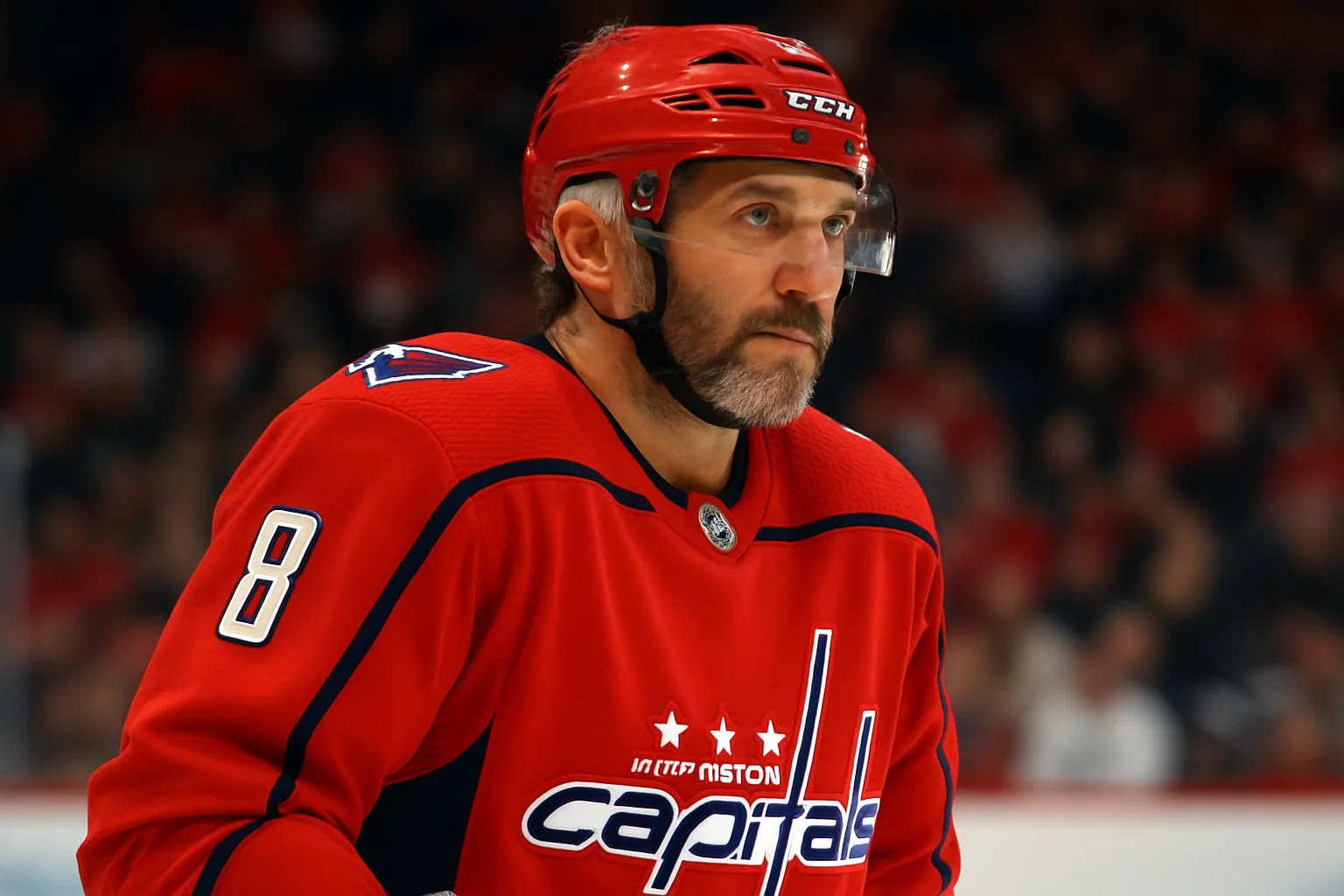
Alex Ovechkin will return to the Washington Capitals for a 22nd NHL season after signing a one-year, incentive-heavy contract that keeps the league’s all-time goals leader with the only NHL team he has ever played for.
The deal, announced Thursday, gives Ovechkin a $1 million salary and up to $8 million in bonuses. It includes a $3.25 million signing bonus and another $4.75 million if he plays 10 games. The important roster-building detail is the cap hit: $4.25 million, a manageable number for a Capitals team trying to stay competitive around a 40-year-old captain who still changes the math of a game.
Ovechkin, who turns 41 on Sept. 17, scored 32 goals at age 40 and now sits at 929 for his career. That puts him 35 goals ahead of Wayne Gretzky, whose record of 894 he passed on April 6, 2025, at the end of the much-followed “GR8 Chase.”
“I’m healthy. I love playing hockey and competing to win,” Ovechkin said, according to The Associated Press. “I’m excited to come back and join my teammates so we can fight for a playoff spot and have a chance to win.”
Why the Contract Structure Matters
The headline is Ovechkin returning. The more interesting part is how Washington made the return fit.
A flat, high-salary deal for a veteran star can create awkward roster pressure. It pays for the name, but it can also limit a front office’s ability to add depth, patch holes, or handle injuries during the season. Ovechkin’s deal does something different: it gives him a path to meaningful compensation while keeping the official cap charge low enough for the Capitals to keep working on the rest of the roster.
That matters because Washington is not simply staging a farewell tour. The source material points to a retooled roster and a club trying to give Ovechkin a real chance to chase another Stanley Cup run. A $4.25 million cap hit for a player who just scored 32 goals is not a small line item, but it is far easier to build around than a contract that treats past greatness as the only consideration.
The 10-game bonus trigger also signals a practical assumption: if Ovechkin is healthy enough to begin the season and play regularly, the deal becomes financially substantial. If his body does not cooperate, Washington has not locked itself into the same cap burden it would have carried under a simpler guaranteed structure.
The Record Is No Longer the Chase. It Is the Cushion.
For years, Ovechkin’s late-career story was framed around one question: could he catch Gretzky? That question has been answered. The new question is harder to package but more revealing: how far can he move the record before he leaves?
At 929 goals, every additional season changes the shape of the leaderboard for future generations. A modest scoring season by Ovechkin’s standards would push the record closer to a number that feels less like a target and more like a historical outlier. Even 20 more goals would matter. Another 30-goal season would make the next chase more daunting.
That is not just trivia. Records influence how eras are remembered. Gretzky’s 894 once looked almost untouchable because it combined extreme peak production with durability and longevity. Ovechkin’s record now carries a different lesson: elite finishing, physical resilience, and organizational continuity can stretch a superstar’s relevance far beyond the normal aging curve.
A Concrete Example: What This Means in a Real Game
Consider a tight February game in which Washington is chasing a playoff spot and trailing by one on a third-period power play. Even at 40, Ovechkin’s presence changes defensive behavior. The penalty kill has to account for his one-timer threat, especially from his familiar shooting area. That can open a seam elsewhere, force an extra rotation, or give another Capitals forward more room near the net.
In that kind of moment, his value is not limited to whether he scores. He bends coverage because opponents still have to respect the shot. A younger player with similar ice time but less reputation may not create the same panic. That is why Washington’s decision cannot be judged only by age. It has to be judged by whether Ovechkin still creates leverage in the situations that decide games.
The 32-goal season suggests he does. It does not guarantee another one, and it does not erase the risks of relying on a player entering his age-41 season. But it gives the Capitals a legitimate reason to treat this as more than nostalgia.
What Washington Is Really Betting On
The Capitals are betting on three things at once.
- Health: Ovechkin said he is healthy, and the bonus structure rewards him if he is available early.
- Finishing: A 32-goal season at age 40 shows the shot remains a bankable weapon.
- Roster flexibility: The $4.25 million cap hit helps Washington keep room for the supporting cast a playoff team needs.
The third point may be the most important. Late-career stars often create a difficult emotional problem for franchises. The player has earned loyalty. The team owes its fans a competitive product. The front office has to honor both without turning the season into a museum exhibit.
This contract is one way to thread that needle. Ovechkin returns as the central figure, but Washington still has a chance to make the roster about winning hockey games, not only celebrating milestones.
What to Watch Next
The next checkpoint is not whether Ovechkin reaches another round number. It is how Washington deploys him and how much the roster around him improves.
If the Capitals can reduce the burden on him at even strength while keeping him dangerous in scoring situations, the deal can work as both a hockey decision and a legacy decision. If they need him to carry too much of the attack at 41, the contract’s flexibility will matter less than the limits of age and depth.
There is also the question Ovechkin himself left hanging before the deal: whether this is really the final season. The contract is for one year, and the language around a possible sendoff is unavoidable. But the reason he is coming back is equally plain. He can still score, he still wants to compete, and Washington has not closed the door on one more meaningful run.
For the Capitals, that is enough to justify the return. For the rest of the NHL, it means the all-time goals record is still a moving number.