
Nearly 50 trades were completed on the final day of Major League Baseball’s 2026 trade season, but the deadline was defined by more than volume. The strongest contenders used the market to correct identifiable roster problems: an unreliable rotation, an unproductive position, too many strikeouts or a lineup missing power.
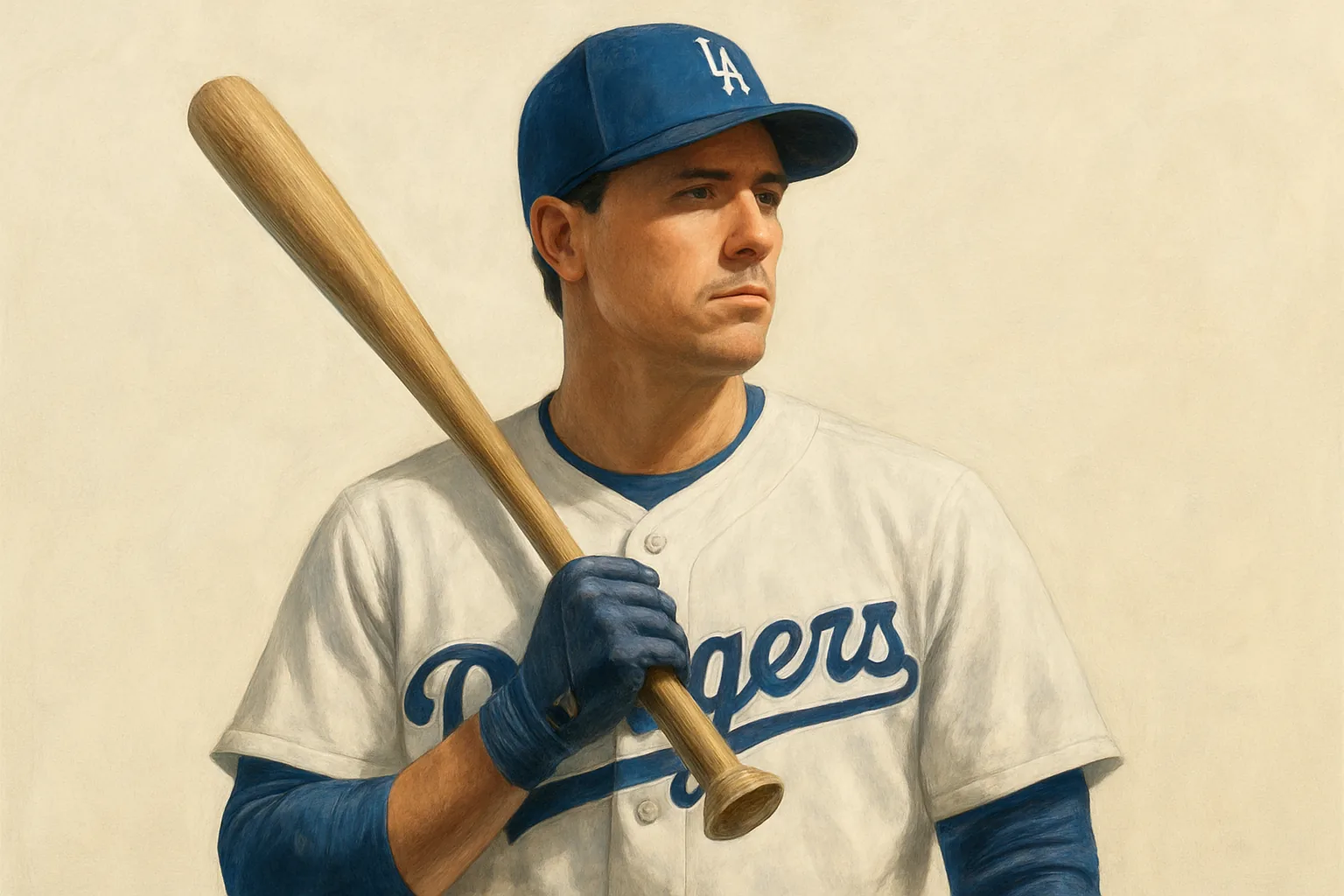
The headline belonged to the Los Angeles Dodgers, who acquired two-time reigning American League Cy Young Award winner Tarik Skubal from Detroit. Yet the full MLB transaction tracker reveals a wider contest. Boston made a costly bet on Adley Rutschman, Philadelphia reshaped its defense to accommodate Luis Arraez, and San Diego bought two starters after an eight-win surge pulled it back toward a playoff place.
Those deals cannot be graded properly on name recognition alone. Their value depends on whether each new player solves the problem his club actually has.
The Dodgers bought both an ace and insurance
Skubal was the market’s most consequential player. Los Angeles sent outfielder Zyhir Hope and right-handers River Ryan and Brady Smith to Detroit; Hope and Ryan were both ranked among MLB Pipeline’s Top 100 prospects.
The price reflects what Skubal can change in October. A short postseason series concentrates innings among a club’s best pitchers, making a frontline starter disproportionately valuable. Los Angeles can now place Skubal alongside a rotation that expects Blake Snell and Tyler Glasnow back from the injured list.
There is risk. Skubal underwent left elbow surgery in May, and he can become a free agent after the season. The Dodgers therefore surrendered premium future value for a limited window. They also acquired injured left-hander Kris Bubic from Kansas City, potentially as a postseason reliever if he returns before the end of August.
That combination is instructive. Skubal raises the rotation’s ceiling; Bubic adds another possible route through October if injuries or workload concerns intervene. The Dodgers did not simply collect pitchers. They increased the number of viable postseason plans available to them.
San Diego responded to the standings
The Padres entered deadline day having won eight of nine games and moved within one game of a National League playoff spot. They answered that opportunity by acquiring Casey Mize from Detroit and Robbie Ray from San Francisco.
The need was difficult to dispute. San Diego starters had produced a 4.66 ERA, the fourth-highest figure in the majors. Mize arrived with a 2.70 ERA across 16 starts, while Ray had a 3.08 ERA and had allowed runs at a 1.09 ERA pace over his previous eight outings.
San Diego paid accordingly. Left-hander Kash Mayfield, its No. 2 prospect, went to Detroit in the Mize trade. The Giants received two top-10 Padres prospects for Ray, including No. 4 prospect Miguel Mendez.
This is the classic deadline calculation: recent results created a credible playoff opening, while the rotation was the clearest threat to exploiting it. Standing still would have preserved the farm system but left the Padres dependent on the same unit that had put their season under strain.
Boston paid for a difficult position to upgrade
The Red Sox made one of the deadline’s boldest trades by acquiring Rutschman and catcher Jake Rogers from Baltimore. In return, the Orioles received a five-player package that included Boston’s Nos. 2, 4 and 5 prospects.
Rutschman is on the injured list with left wrist inflammation, and his production has declined from the level he established in his first two seasons. That makes the prospect cost uncomfortable. It also explains why Boston could acquire a 28-year-old catcher who remains under club control through 2027.
Catchers with Rutschman’s offensive history and everyday experience rarely reach the summer market. Boston was attempting to improve one of baseball’s least productive catching situations, not add depth to an already strong position. If his wrist recovers and his 2026 improvement—represented by a 115 OPS+—holds, the gain could extend beyond this postseason.
Baltimore’s side also reflects sound roster logic. The Orioles have Samuel Basallo under a long-term contract and converted a player approaching free agency into several high-level prospects. The deal can make sense for both clubs even if only one receives immediate help.
Philadelphia’s trade requires a lineup redesign
Luis Arraez gives the Phillies something their offense lacked: elite contact. He entered deadline day leading the National League with a .324 batting average and had struck out only 21 times, the fewest in MLB. Philadelphia, by contrast, had the seventh-most team strikeouts.
The fit is not automatic. Accommodating Arraez at second base is expected to send Bryce Harper back to the outfield, Alec Bohm to first base and Bryson Stott to third. One acquisition could therefore alter four defensive assignments.
Consider a concrete late-game example: a single by Arraez ahead of Harper and Kyle Schwarber gives Philadelphia two opportunities to drive in a runner without requiring a home run. That matters for a club whose power hitters have not consistently batted with runners aboard. Schwarber entered deadline day with 33 homers but 63 RBIs, while the Phillies’ .304 on-base percentage ranked second-lowest in the majors.
The trade is a bet that more traffic on the bases will outweigh the defensive disruption. That balance, rather than Arraez’s batting average by itself, will determine whether the move improves Philadelphia.
The Cubs and Guardians attacked multiple weaknesses
Chicago’s rotation had been depleted by injuries to Cade Horton, Justin Steele, Edward Cabrera and Ben Brown. The Cubs responded with Kevin Gausman and Clay Holmes, then added high-leverage reliever Ryan Zeferjahn.
Gausman carried a 4.38 ERA but served as Toronto’s leading postseason starter during its 2025 run to the World Series. Holmes had recorded a 2.39 ERA in nine starts before fracturing his fibula. Neither is a risk-free addition, but together they reduce the chance that one failed recovery or poor stretch wrecks Chicago’s rotation plan.
Cleveland chose a different form of accumulation. The Guardians added starter Foster Griffin, outfielder Jo Adell and first baseman Nathaniel Lowe. Adell supplies power to a lineup that ranked last in slugging percentage, while Lowe’s 122 OPS+ would place him among the strongest hitters in Cleveland’s projected everyday group. Griffin, an All-Star with a 3.06 ERA, strengthens a rotation that had been unusually stable but thin on alternatives.
For Cleveland, the deadline was less about finding one transformative player than raising the floor in several places. That can be valuable over the final two months, when a contender needs enough lineup and pitching depth to survive ordinary injuries and slumps.
What will decide the deadline
The first question is health. Rutschman, Holmes and Bubic were injured when traded, while Skubal only recently returned from elbow surgery. Their clubs bought possible October impact without certainty about the route there.
The second is whether rentals justify premium prospect costs. Skubal, Gausman and Freddy Peralta, acquired by Tampa Bay, can reach free agency after the season. A deep postseason run can make that exchange worthwhile; an early exit leaves a much harsher accounting.
Finally, watch how quickly managers settle on roles. Philadelphia must make several defensive changes. The Dodgers have to organize a crowded pitching staff. San Diego must integrate two starters while pursuing a playoff berth immediately.
The deadline established which front offices were willing to pay. The remaining schedule will answer the more important question: whether they diagnosed their teams correctly.